Best Dutch Ovens for Sourdough Baking in 2026 (Size, Material, Price)
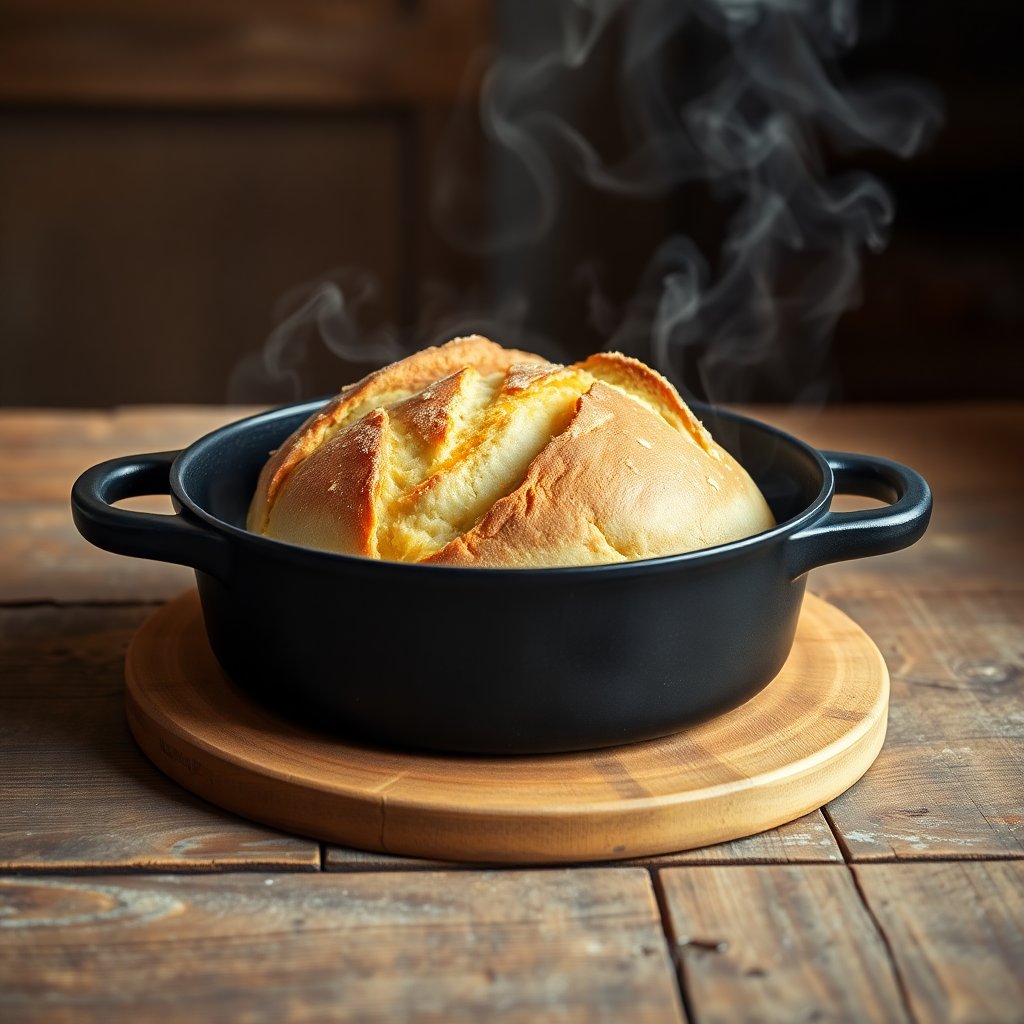
If you're serious about baking sourdough at home, the Dutch oven you choose matters more than your flour brand, your scoring technique, or how long you fermented your dough. The Dutch oven is your steam chamber — it traps moisture from the dough during the first phase of baking, keeping the crust pliable so the loaf can expand fully before the crust sets. Without that trapped steam, you get a dense, flat loaf with no ear and no oven spring.
But which Dutch oven should you actually buy? The options range from $30 bare cast iron to $400+ enameled French imports. Some are perfect for sourdough. Others look beautiful on a shelf but don't perform when it counts.
This guide breaks down the best Dutch ovens for sourdough baking in 2026 by size, material, and price — so you can pick the right one for your kitchen and your budget.
Why the Dutch Oven Matters for Sourdough
Professional bakeries use steam-injected deck ovens. Home bakers don't have that luxury. A Dutch oven solves the problem by creating a sealed, high-heat environment that mimics a commercial steam oven.
Here's what happens when you bake sourdough in a preheated Dutch oven:
- Steam retention — The lid traps moisture released from the dough, keeping the surface wet during the first 20 minutes. This allows maximum oven spring.
- Radiant heat — Cast iron absorbs and radiates heat evenly, giving the loaf consistent bottom and side crust.
- Crust development — After you remove the lid for the final 20–25 minutes, the dry heat caramelizes the crust into that deep, crackly finish sourdough is known for.
If you're new to the process, our sourdough beginners guide walks through the full bake cycle step by step.
What to Look for When Buying a Dutch Oven for Bread
Before we get to specific models, here are the factors that actually matter when choosing a Dutch oven for sourdough.
Size: 5-Quart vs. 7-Quart
For a standard 500g flour / 1-pound sourdough loaf, a 5-quart Dutch oven is the sweet spot. The dough fits comfortably and the smaller interior volume means more concentrated steam around the loaf.
A 7-quart Dutch oven works too — especially if you bake larger batards or want more clearance for high-hydration doughs that spread. But bigger isn't always better; too much airspace dilutes the steam effect.
Bottom line: Buy a 5-quart if you bake standard boules. Go 7-quart if you regularly bake large loaves or want a more versatile pot for cooking.
Material: Bare Cast Iron vs. Enameled Cast Iron
Bare cast iron (like Lodge) is affordable, nearly indestructible, and handles the 450–500°F temperatures sourdough requires without complaint. The downside: it needs seasoning, and acidic dough can interact with the surface over time.
Enameled cast iron (like Le Creuset or Staub) has a smooth, non-reactive interior that's easier to clean and won't affect dough flavor. The trade-off is price — enameled Dutch ovens cost 3–8x more — and the enamel can chip or crack with repeated high-heat use over years.
Both work extremely well for sourdough. The difference is maintenance and longevity, not baking performance.
Shape: Round vs. Oval
Round Dutch ovens are ideal for boules (round loaves) and are the most common choice among home sourdough bakers.
Oval Dutch ovens are better for batards (oblong loaves) and give you more flexibility if you also use the pot for roasting. If you score your bread with patterns and want room for the loaf to open up, oval gives you more working space. For scoring techniques, check our guide to scoring sourdough.
Lid Design
A flat or slightly concave lid is better for sourdough than a domed lid. Some bakers flip the Dutch oven upside down and use the lid as the base — a flat lid makes this technique easier and gives you better access for loading dough.
Heat Tolerance
Most Dutch ovens handle 450°F fine. But sourdough recipes often call for 475–500°F preheating. Check the manufacturer's maximum temperature rating. Plastic or phenolic knobs (common on Le Creuset) may need to be swapped for metal knobs at these temperatures.
Best Dutch Ovens for Sourdough in 2026: Our Top Picks
We've tested and compared the most popular Dutch ovens used by home sourdough bakers. Here's how they stack up.
Comparison Table
| Dutch Oven | Material | Size | Max Temp | Weight | Best For | Price Range | |---|---|---|---|---|---|---| | Lodge 5-Qt Cast Iron | Bare cast iron | 5 qt | 500°F | 14 lbs | Budget bakers, beginners | $30–$50 | | Lodge 7-Qt Cast Iron | Bare cast iron | 7 qt | 500°F | 17 lbs | Large loaves, versatile cooking | $50–$70 | | Le Creuset Round 5.5-Qt | Enameled cast iron | 5.5 qt | 500°F (with metal knob) | 11.5 lbs | Serious bakers who want durability + aesthetics | $280–$380 | | Staub Round Cocotte 5.5-Qt | Enameled cast iron | 5.5 qt | 500°F | 12 lbs | Bakers who want self-basting + dark interior | $250–$350 | | Cuisinart Chef's Classic 5-Qt | Enameled cast iron | 5 qt | 500°F | 11 lbs | Mid-budget enameled option | $70–$100 |
1. Lodge 5-Quart Cast Iron Dutch Oven — Best Budget Pick
The Lodge 5-quart cast iron Dutch oven is the default recommendation in nearly every sourdough community, and for good reason. It's cheap, it's tough, and it bakes bread as well as pots costing ten times more.
The bare cast iron handles 500°F preheats without flinching. The 5-quart size is perfect for standard sourdough boules. It comes pre-seasoned from the factory, though serious bakers usually add a few extra rounds of seasoning.
Pros:
- Unbeatable price-to-performance ratio
- Handles extreme temperatures without damage
- Will last decades (or longer) with basic care
Cons:
- Heavy at 14 lbs
- Requires seasoning maintenance
- No color options (it's black)
If you're buying your first Dutch oven for sourdough and don't want to overthink it, this is the one to get.
2. Lodge 7-Quart Cast Iron Dutch Oven — Best for Large Loaves
The Lodge 7-quart cast iron Dutch oven is the bigger sibling. Same bulletproof construction, more interior room. If you bake 800g–1kg loaves, or if you want a Dutch oven that doubles for stews and roasts on non-baking days, the 7-quart is the smarter buy.
The extra space means slightly less steam concentration, but in practice the difference is minimal for most bakers. The larger opening also makes loading dough easier — less chance of burning your hands on the rim.
Pros:
- More room for large or high-hydration loaves
- Versatile for cooking beyond bread
- Same durability as the 5-quart
Cons:
- Heavier at 17 lbs — awkward to handle at 475°F
- More oven space required
- Slight steam dilution compared to 5-quart
3. Le Creuset Round Dutch Oven 5.5-Qt — Best Premium Enameled Option
The Le Creuset 5.5-quart round Dutch oven is the gold standard for enameled cast iron. The enamel coating means zero seasoning maintenance, easy cleanup, and no metallic taste interaction with acidic doughs.
Le Creuset's enamel is rated to 500°F, but the classic phenolic knob is only rated to 390°F. You'll want to swap it for a stainless steel replacement knob if you preheat above 400°F — which you will for sourdough.
Pros:
- Best-in-class enamel durability
- No seasoning required
- Lighter than bare cast iron equivalents
- Lifetime warranty
Cons:
- Expensive ($280–$380 depending on color)
- Knob must be swapped for high-heat baking
- Enamel can chip with heavy use over many years
Worth the investment if you bake frequently and want something that looks as good as it performs.
4. Staub Round Cocotte 5.5-Qt — Best for Steam Retention
The Staub 5.5-quart round cocotte is Le Creuset's main competitor, and some sourdough bakers actually prefer it. The key difference: Staub's lid has interior spikes (called "self-basting spikes") that continuously channel condensation back down onto the bread. This creates even more consistent steam distribution during the covered bake phase.
Staub also uses a matte black enamel interior instead of Le Creuset's light cream interior. The black enamel absorbs more radiant heat, which can produce a slightly deeper crust color.
Pros:
- Self-basting lid improves steam distribution
- Black enamel interior for better heat absorption
- Metal knob included (no swap needed)
- Marginally less expensive than Le Creuset
Cons:
- Still expensive ($250–$350)
- Darker interior makes it harder to monitor browning for other cooking
- Heavier than Le Creuset at equivalent sizes
5. Cuisinart Chef's Classic 5-Qt — Best Mid-Range Enameled Option
Not everyone wants to spend $300+ on a Dutch oven. The Cuisinart Chef's Classic enameled cast iron Dutch oven sits in the sweet spot between Lodge's bare cast iron and the premium European brands. You get enameled convenience — no seasoning, easy cleaning, no flavor interaction — at roughly a quarter of Le Creuset's price.
The enamel quality isn't at the Le Creuset or Staub level. It may chip sooner with repeated 475°F+ preheats. But for bakers who want enameled cast iron without the premium price, this is the best option on the market.
Pros:
- Enameled at a fraction of premium pricing
- No seasoning maintenance
- Good heat distribution
- Available in multiple colors
Cons:
- Enamel less durable than Le Creuset or Staub
- Lighter construction may mean less heat retention
- Knob may need replacement for high-heat use
Dutch Oven Alternatives for Sourdough
A traditional Dutch oven isn't your only option. Some bakers prefer dedicated bread-baking vessels:
- Challenger Bread Pan — A purpose-built cast iron baker with a shallow base and deep lid. Easier to load dough, excellent steam retention. More expensive than a Lodge but designed specifically for sourdough.
- Cast iron combo cooker — A Lodge combo cooker with a skillet lid that doubles as a shallow baking surface. Many bakers prefer this because you load the dough into the shallow skillet (easier access) and cover it with the deeper pot.
- Cloche / bread dome — Ceramic cloches trap steam like a Dutch oven but are lighter and designed for bread. Less versatile for cooking but excellent for baking.
How to Use a Dutch Oven for Sourdough
Here's the basic process, regardless of which Dutch oven you choose:
- Preheat — Place the Dutch oven (with lid) in your oven and preheat to 450–500°F for at least 45 minutes. The cast iron needs to be fully saturated with heat.
- Load the dough — Carefully remove the Dutch oven, take off the lid, and drop your shaped, proofed dough inside. Use parchment paper to make this easier and prevent sticking.
- Score — Score the top of the loaf with a sharp lame or razor blade. The score controls where the bread expands.
- Covered bake — Replace the lid and bake for 20 minutes. The trapped steam does its work during this phase.
- Uncovered bake — Remove the lid and bake for another 20–25 minutes until the crust is deep golden-brown and the internal temperature reads 205–210°F.
- Cool — Remove the loaf and cool on a wire rack for at least one hour before cutting. The bread is still baking internally during this phase.
Frequently Asked Questions
What size Dutch oven is best for sourdough?
A 5-quart Dutch oven is the best size for standard sourdough boules made with 500g of flour. If you regularly bake larger loaves (750g+ flour), step up to a 7-quart.
Can I use an enameled Dutch oven for sourdough?
Yes. Enameled cast iron works just as well as bare cast iron for sourdough baking. The enamel is safe at sourdough baking temperatures (450–500°F) as long as any plastic knobs are swapped for metal ones.
Do I need to preheat my Dutch oven?
Absolutely. Preheating the Dutch oven for 45–60 minutes ensures the cast iron is fully heat-saturated. Dropping dough into a cold or under-heated Dutch oven will kill your oven spring.
Is a $50 Lodge as good as a $350 Le Creuset for bread?
For baking performance alone, the difference is minimal. Both trap steam, both retain heat, both produce excellent sourdough. The Le Creuset is easier to maintain, lighter, and looks better. The Lodge is cheaper and more durable. Choose based on your budget and how much you care about aesthetics and convenience.
Can I use my Dutch oven on the stovetop too?
Yes — both bare and enameled cast iron Dutch ovens work on all stovetop surfaces including induction. This makes them versatile for soups, stews, braises, and deep frying on non-baking days.
The Bottom Line
The best Dutch oven for sourdough in 2026 depends on your budget and priorities:
- Best overall value: Lodge 5-Qt Cast Iron — hard to beat at under $50
- Best premium pick: Le Creuset 5.5-Qt — if you want the best enamel and a lifetime warranty
- Best steam retention: Staub 5.5-Qt Cocotte — the self-basting lid gives it an edge
- Best mid-range: Cuisinart Chef's Classic 5-Qt — enameled convenience without the premium price
- Best for large loaves: Lodge 7-Qt Cast Iron — more room, same bulletproof construction
Don't overthink it. A $40 Lodge has produced thousands of perfect sourdough loaves. Buy what fits your budget, preheat it properly, and focus on your dough. The Dutch oven is important — but it doesn't need to be expensive.
As an Amazon Associate we earn from qualifying purchases. This article contains affiliate links; if you buy through them we may earn a small commission at no additional cost to you.