
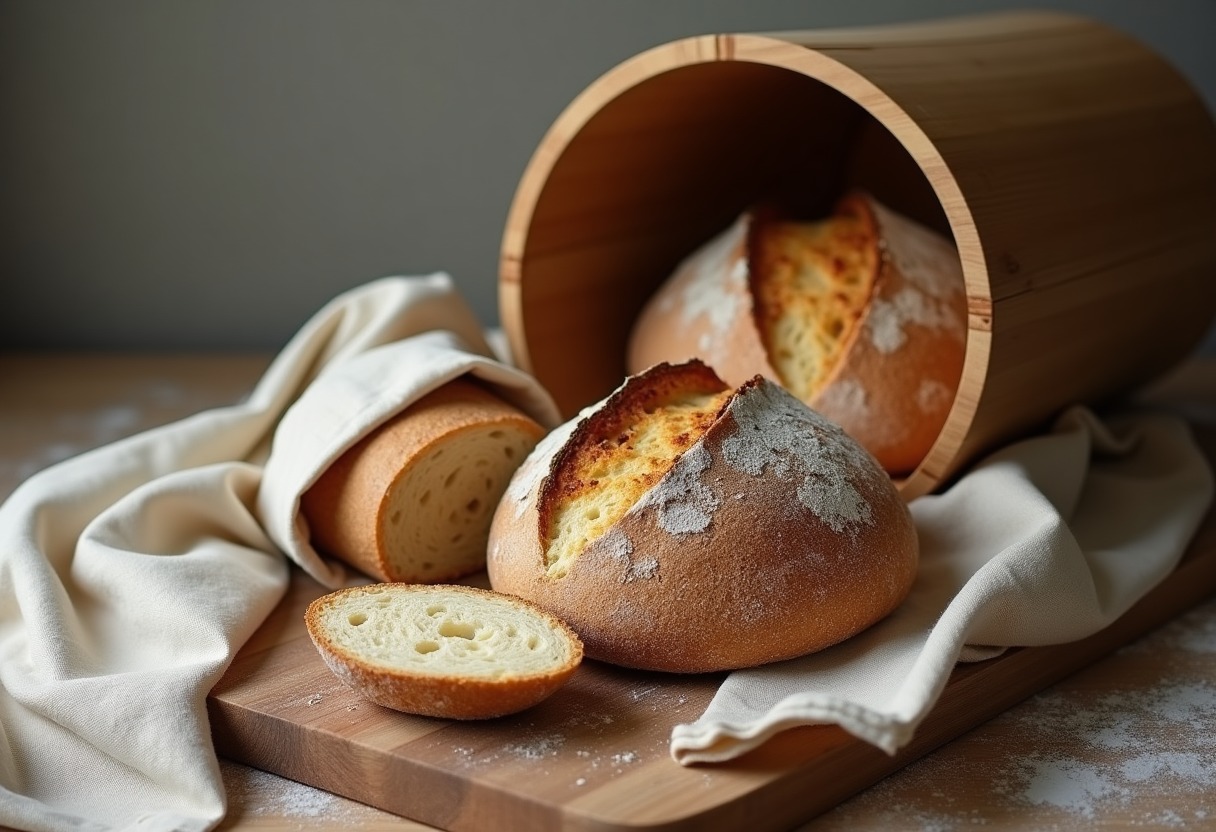
Your sourdough loaf emerged from the oven with a dark, blistered crust and an open crumb that took three days to achieve. Within 24 hours, that crust turns leathery and the interior goes dry. Storage method determines whether your bread stays bakery-fresh for five days or turns to toast fodder by day two.
Why Sourdough Bread Storage Differs From Commercial Loaves
Sourdough bread contains no preservatives, lower pH from lactic acid fermentation, and significantly less moisture than commercial bread. According to research published in the Journal of Agricultural and Food Chemistry, sourdough's organic acids create an environment that naturally inhibits mold growth but doesn't prevent staling — the retrogradation of starch molecules that causes that characteristic dry texture.
The thick, caramelized crust you worked hard to develop acts as both protection and liability. That crust needs air circulation to maintain its shatter, but the crumb needs humidity to stay tender. Commercial bread, wrapped in plastic immediately after slicing, prioritizes shelf life over texture. Your sourdough deserves better.
The microbes in your sourdough starter created acids that give the bread a shelf life of 4-7 days at room temperature — longer than yeasted bread but shorter than you'd expect from something that took so long to make. The key is matching storage method to timeline.
Counter Storage: The First 2-3 Days
Cut surface down on a wooden cutting board. That's it. No bag, no wrap, nothing between bread and board for the first 12 hours after the loaf cools completely. The cut face dries slightly, forming a protective barrier, while the intact crust maintains its texture.
After day one, wrap the loaf in a clean linen tea towel or place it cut-side down in a → Shop bread box on Amazon. The towel absorbs excess moisture from the crust while allowing enough air circulation to prevent that plastic-bag sweat that turns crust to rubber. A proper bread box does the same thing with more counter presence.
Paper bags work for 24-48 hours maximum. The bag breathes but doesn't regulate humidity, so the crust stays relatively crisp while the crumb dries faster than you'd like. I use paper bags only when I'm planning to finish the loaf within two days.
→ Shop linen bread bags on Amazon offer the best balance for counter storage beyond day two. The tightly woven linen creates a microclimate that keeps the crust from going soggy while slowing moisture loss from the crumb. After testing cotton, linen, and synthetic bags, linen consistently kept loaves fresh an extra day.
Never refrigerate sourdough unless you're deliberately making it stale for breadcrumbs or panzanella. The refrigerator accelerates starch retrogradation — the same crystallization process that makes bread go stale — according to King Arthur Baking Company's bread science team. Cold temperatures between 35-50°F speed staling faster than room temperature storage.
Freezer Storage: Beyond Day 3
Freeze sourdough bread while it's still fresh, not as a last resort when it's already going stale. The best window is 12-24 hours after baking, once the loaf has fully cooled and the crumb structure has set but before any staling begins.
Slice before freezing if you want the option of toasting single pieces. Leave whole if you're planning to revive the entire loaf. Both methods work, but the decision needs to happen before the bread hits the freezer.
Wrap thoroughly: first in parchment or wax paper, then in aluminum foil, then into a → Shop freezer bread bags on Amazon. The triple layer prevents freezer burn and that absorbed freezer smell that ruins bread texture and flavor. Skip the plastic wrap — it traps moisture against the crust and creates ice crystals.
→ Shop beeswax food wraps on Amazon work well for the first layer if you prefer reusable options. The wax coating provides moisture protection while the fabric breathes enough to prevent condensation buildup.
Frozen sourdough holds quality for three months. Beyond that, ice crystal formation starts breaking down the crumb structure even in properly wrapped loaves. Label your bags with freezing date using permanent marker.
Thaw at room temperature in the wrapping for 3-4 hours. For sliced bread, pull individual pieces and toast directly from frozen. For whole loaves, once thawed, revive the crust by misting the entire surface with water and placing in a 350°F oven for 10-12 minutes. The moisture converts to steam, re-crisping the crust and warming the crumb.
Storage Method Comparison
| Method | Ideal Timeframe | Crust Texture | Crumb Moisture | Best For | |--------|----------------|---------------|----------------|----------| | Cut-side down, uncovered | 12-24 hours | Excellent crackle | Stays moist | Immediate consumption | | Linen bag/bread box | 2-5 days | Good, softens slightly | Well-preserved | Daily eating | | Paper bag | 1-2 days | Maintains well initially | Dries faster | Short-term only | | Triple-wrapped freezer | 3 months | Revives well | Excellent if thawed properly | Long-term storage |
What Actually Keeps Sourdough Fresh Longer
Pre-slicing accelerates staling by exposing more crumb surface to air. Cut only what you need, using a proper serrated knife from our Best Bread Knives 2026 guide. Store the knife separately in a → Shop bread knife storage on Amazon to protect both the blade edge and your fingers.
Higher hydration doughs — those above 75% — stay fresh longer because there's simply more water in the crumb to lose before the bread tastes dry. If you're consistently fighting stale bread by day three, try increasing your dough hydration by 5% in your next bake. Our Sourdough Hydration Levels Guide walks through the adjustments needed for wetter doughs.
Whole grain sourdough stales faster than white flour loaves because bran particles cut gluten strands and create more surface area for moisture loss. A 50% whole wheat loaf needs more aggressive storage — linen bag immediately after cooling — compared to a white flour boule that can sit uncovered for a day.
Room temperature matters more than you'd think. Bread stored at 70-75°F maintains texture longer than bread in a 65°F kitchen. If your house runs cold, the bread box or linen bag becomes even more critical for creating a slightly warmer microenvironment around the loaf.
Humidity cuts both ways. In a dry climate (below 40% relative humidity), bread stales noticeably faster and benefits from the enclosed environment of a bread box. In humid climates above 60%, that same bread box can trap too much moisture and encourage mold. Adjust your method to your environment.
Reviving Day-Old Sourdough
Mist the entire crust with water from a spray bottle. Place the loaf directly on the oven rack at 350°F for 8-10 minutes. The water converts to steam, softening the exterior before re-crisping as it evaporates. This works through day four if the bread was stored properly.
For sliced bread that's gone slightly stale, toast it. Sourdough's complex flavor profile actually benefits from the Maillard reaction that occurs during toasting, bringing out nutty, caramelized notes that weren't prominent in the fresh bread.
Individual slices can be refreshed by running them under water for one second per side, then toasting in a 375°F oven for 5-6 minutes. The brief water exposure hydrates the crumb without making it soggy, and the oven heat drives off the excess moisture while warming the interior.
Stale sourdough — truly stale, past the point of revival — belongs in breadcrumbs, croutons, or panzanella. Pulse dried chunks in a food processor for breadcrumbs, or cube and toss with olive oil and herbs for croutons baked at 375°F until golden. Stale bread cubed and soaked in tomato juices makes better panzanella than fresh bread, which turns mushy instead of pleasantly softened.
The loaves you spent three days crafting deserve storage that preserves your work. Room temperature in linen for daily eating, freezer for long-term, and never the refrigerator unless you're deliberately making stuffing.
FAQ
How long does sourdough bread last at room temperature? Properly stored sourdough lasts 4-5 days at room temperature in a linen bag or bread box. The natural acids from fermentation inhibit mold but don't prevent staling, so texture degrades before safety becomes an issue. Higher hydration loaves stay fresh slightly longer.
Should I store sourdough bread in plastic? No. Plastic bags trap moisture against the crust, turning it soft and leathery within hours. The condensation also creates an environment where mold develops faster than in breathable storage. Use linen bags or bread boxes that allow air circulation while moderating humidity.
Can you freeze sourdough bread after slicing? Yes, and it's often more practical than freezing whole. Separate slices with parchment squares, wrap the stack in foil, then bag it. Pull individual slices and toast directly from frozen, or thaw at room temperature for 20-30 minutes. Quality holds for three months.
Why does my sourdough crust get soft in storage? Moisture from the crumb migrates outward into the crust when bread is stored in an environment that doesn't allow evaporation. This happens in plastic bags or overly sealed containers. Counter this by using breathable storage like linen bags or leaving the cut surface exposed to air.
How do you refresh stale sourdough bread? Mist the entire loaf with water and heat at 350°F for 8-10 minutes. The moisture steams the crust soft, then evaporates to recreate the initial crackle. This works through day four if the bread was stored in linen or a bread box, less effectively if it was in plastic.
The bread that took you three days to create deserves storage that respects the process — linen bags for the week ahead, triple-wrapped freezing for the month ahead, and never the refrigerator unless you're making croutons.
Some links on this page are affiliate links. We may earn a small commission if you purchase through them, at no extra cost to you.
As an Amazon Associate we earn from qualifying purchases. This article contains affiliate links; if you buy through them we may earn a small commission at no additional cost to you.