
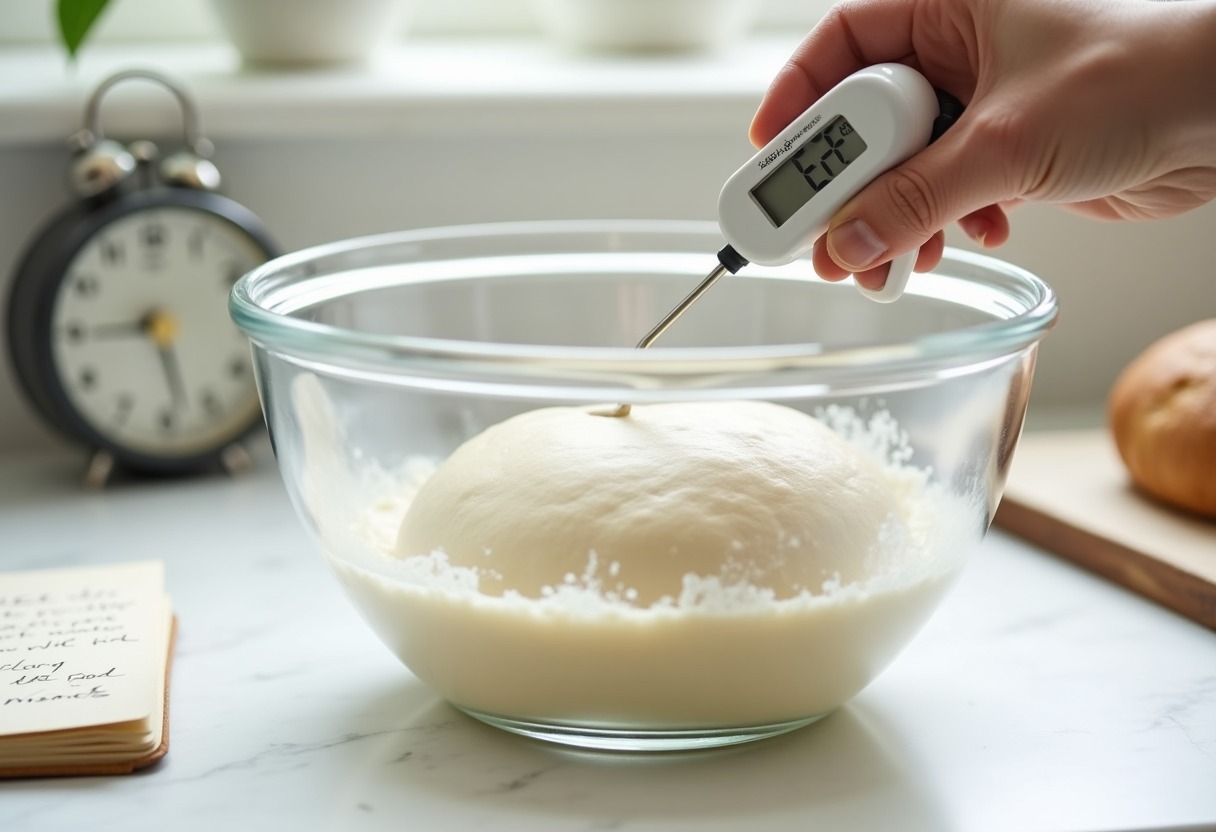
Your sourdough's bulk fermentation window determines whether you'll slice into an airy, well-structured loaf or a dense brick that mocks your patience. This first rise after mixing builds the dough's strength, develops flavor, and creates the foundation for your final bread structure—but most bakers either rush it or let it drag on too long.
Why Bulk Fermentation Makes or Breaks Your Sourdough
Bulk fermentation transforms your shaggy dough mixture into a smooth, elastic mass ready for shaping. During this phase, wild yeast produces carbon dioxide that creates your bread's eventual air pockets, while lactic acid bacteria develop the signature tangy flavor that separates sourdough from commercial bread.
The process relies on enzyme activity breaking down starches into simple sugars that feed your sourdough culture. According to King Arthur Baking, proper bulk fermentation typically increases dough volume by 50-70% while developing the gluten network that traps gases and creates structure. Temperature directly controls fermentation speed—every 10°F increase roughly doubles the rate of yeast activity.
Understanding these biological processes helps you recognize when your dough has reached optimal development rather than relying solely on clock time, which varies dramatically based on your starter strength, flour type, and environmental conditions.
Reading Your Dough: Visual and Physical Cues
Successful bulk fermentation requires reading your dough's development through multiple indicators. Volume increase provides the most obvious sign—properly fermented dough should grow 50-70% larger than its original size. But volume alone doesn't tell the complete story.
The poke test reveals dough readiness more accurately than time alone. Gently poke the dough surface with a floured finger about half an inch deep. Properly fermented dough springs back slowly, leaving a slight indentation that fills in gradually over 10-15 seconds. Under-fermented dough bounces back immediately, while over-fermented dough stays dimpled or feels slack.
Dough surface appearance changes dramatically during bulk fermentation. Fresh mixed dough feels rough and tears easily. As fermentation progresses, the surface becomes smooth and slightly domed. You'll notice small bubbles forming just beneath the surface, and the dough develops a subtle sheen. The edges where dough meets container should appear slightly rounded rather than angular.
Properly fermented dough jiggles gently when you shake the container—it moves as a cohesive mass rather than sloshing like batter or sitting rigid like clay. The dough should feel lighter in your hands and slightly warmer than room temperature due to metabolic heat from active fermentation.
Temperature control during bulk fermentation determines both timing and flavor development. Use a → Shop digital instant thermometers on Amazon to monitor your dough temperature accurately throughout the process.
Temperature Control and Timing Guidelines
Fermentation temperature directly controls how long your bulk fermentation takes and influences your bread's final flavor profile. Cooler temperatures slow fermentation while developing more complex, tangy flavors. Warmer conditions speed the process but can create alcoholic off-flavors if pushed too far.
The ideal bulk fermentation temperature range sits between 75-80°F. At these temperatures, most sourdoughs complete bulk fermentation in 4-6 hours depending on starter activity and dough hydration. Track your dough temperature with → Shop fermentation temperature strips on Amazon that stick directly to your fermentation container.
| Temperature Range | Bulk Fermentation Time | Flavor Profile | Risk Factors | |-------------------|----------------------|----------------|--------------| | 65-70°F | 8-12 hours | Complex, very tangy | Over-fermentation if left too long | | 72-78°F | 4-8 hours | Balanced tang and mild sweetness | Most forgiving range | | 78-85°F | 3-5 hours | Mild tang, sweeter notes | Easy to over-ferment | | 85°F+ | 2-4 hours | Alcoholic, harsh flavors | High risk of over-fermentation |
Creating a consistent fermentation environment requires the right container setup. Use → Shop clear plastic dough bowls on Amazon that allow you to monitor dough development from all angles. The straight sides help you judge volume increases more accurately than tapered bowls.
For temperature control in cooler kitchens, consider → Shop proofing box heaters on Amazon or create a simple proofing setup using your oven light. Our comprehensive Bread Proofing Box Guide covers multiple DIY temperature control methods that maintain consistent fermentation conditions.
Advanced Bulk Fermentation Techniques
Professional bakers use stretch and fold sequences during bulk fermentation to build dough strength without traditional kneading. Perform four sets of stretch and folds during the first half of bulk fermentation, spacing them 30 minutes apart. Wet your hands to prevent sticking, grab one side of the dough, stretch it up, and fold it over to the opposite side. Rotate the bowl 90 degrees and repeat three more times.
The coil fold technique works particularly well for high-hydration doughs that feel too wet for traditional stretch and folds. Wet your hands, slide them under the center of the dough, and lift until the sides fold under like a coil spring. Rotate and repeat. This method builds strength while maintaining the dough's delicate structure.
Bulk fermentation timing varies significantly based on your starter's activity level and your flour choice. Strong, recently fed starters ferment dough faster than sluggish cultures. Whole grain flours accelerate fermentation due to increased enzyme activity, while lower-protein flours may require longer development times.
Monitor your specific environment and recipe combination to establish personal timing benchmarks. Keep fermentation notes including room temperature, starter condition, flour types, and actual bulk fermentation duration. This data helps you predict timing for future bakes and adjust for seasonal temperature changes.
The relationship between bulk fermentation and final shaping timing affects your bread's structure significantly. Under-fermented dough lacks flavor development and creates dense, gummy textures. Over-fermented dough loses gluten strength, resulting in flat loaves that spread rather than rise during baking. Understanding these connections helps you troubleshoot common sourdough problems and improve your technique consistently.
Essential Tools for Bulk Fermentation Success
Accurate measurement and monitoring tools prevent the guesswork that leads to fermentation failures. A reliable → Shop dough rising containers on Amazon with volume markings helps track dough growth precisely. Look for containers that hold at least double your dough volume to allow for full expansion.
Digital scales remain essential for consistent results, as covered in our Best Kitchen Scales Baking guide. Weighing ingredients by mass rather than volume eliminates variables that affect fermentation timing.
Temperature consistency throughout bulk fermentation requires monitoring tools that track conditions over time. Some bakers place their fermentation containers in slightly warm ovens with just the light on, creating a stable 78-80°F environment. Others use heating pads designed for reptile terrariums, which provide gentle, consistent warmth.
The container material affects heat retention and dough observation. Glass bowls provide excellent visibility but don't retain heat well. Food-grade plastic containers maintain more consistent temperatures while allowing full visual monitoring. Stainless steel bowls conduct heat efficiently but block your view of dough development.
Your fermentation setup should accommodate the stretch and fold schedule without disrupting temperature stability. Choose containers wide enough for easy hand access and deep enough to contain dough expansion. Cover with damp towels or plastic wrap to prevent surface drying while allowing gas exchange.
FAQ
How do I know if my bulk fermentation is complete without relying on time alone?
Properly completed bulk fermentation shows multiple visual and physical indicators working together. Your dough should increase 50-70% in volume, develop a smooth surface with visible bubbles underneath, and pass the poke test by springing back slowly when gently pressed. The dough feels lighter, slightly warm from fermentation activity, and jiggles as one cohesive mass when you shake the container. Timing varies dramatically based on temperature and starter strength, so these physical cues provide much more reliable indicators than clock watching.
What should I do if my bulk fermentation is taking much longer than expected?
Slow fermentation usually indicates cool temperatures, weak starter activity, or both factors combined. Move your dough to a warmer location between 75-80°F, such as an oven with just the light on or near a heating vent. If your starter seems sluggish, you may need to wait longer or consider feeding your starter more frequently to increase its activity level. Don't rush the process by raising temperatures above 85°F, which can create off-flavors and uneven fermentation.
Can I interrupt bulk fermentation and continue it later?
Yes, you can slow or pause bulk fermentation by refrigerating your dough, though this changes the process dynamics. Cold temperatures nearly stop fermentation while allowing flavor development to continue slowly. When you're ready to continue, bring the dough back to room temperature gradually—this may take 2-3 hours depending on dough mass. The total fermentation time will be longer, but the resulting bread often develops more complex flavors from the extended cold period.
Why does my dough feel slack and sticky even after the recommended bulk fermentation time?
Slack, sticky dough after extended fermentation usually indicates over-fermentation, where yeast has consumed available sugars and gluten structure has begun breaking down. This happens more quickly in warm conditions or with very active starters. The dough may also feel slack if your flour has low protein content or if hydration levels are too high for your skill level. Learning to recognize earlier fermentation stages prevents this problem and improves your timing for future bakes.
How does bulk fermentation timing change with different flour types and hydration levels?
Whole grain flours ferment faster than white flours due to increased enzyme activity and available nutrients for yeast. Higher hydration doughs also ferment more quickly because water allows better enzyme and yeast mobility. Expect whole wheat or high-hydration doughs to complete bulk fermentation 25-40% faster than standard white flour recipes. Lower protein flours may require longer fermentation to develop adequate gluten strength, while very high-protein breads can handle slightly shorter bulk fermentation times.
Perfect bulk fermentation transforms your sourdough from a collection of ingredients into a living, breathing dough ready to become exceptional bread.
Some links on this page are affiliate links. We may earn a small commission if you purchase through them, at no extra cost to you.
As an Amazon Associate we earn from qualifying purchases. This article contains affiliate links; if you buy through them we may earn a small commission at no additional cost to you.