
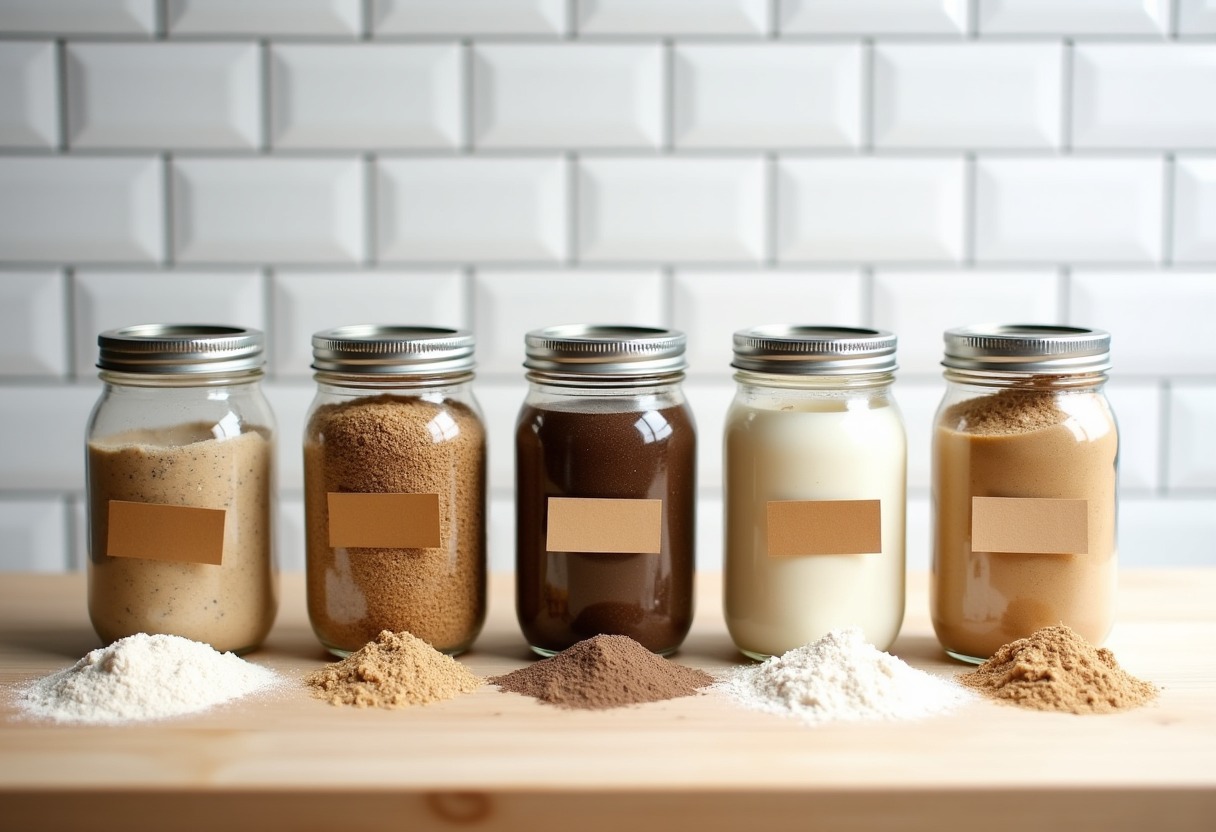
Your starter's health depends less on flour brand than on flour type. Whole wheat produces visible activity within 4-6 hours because the bran and germ carry more wild yeast and lactobacilli. Rye ferments even faster but produces wetter, more acidic starters. All-purpose creates a mild, predictable culture that tolerates irregular feeding schedules. The best flour for sourdough starter matches your maintenance rhythm and bread goals, not marketing claims about "artisan" or "heritage."
Why Flour Type Controls Starter Behavior
Flour provides two resources: food for microbes (sugars from starches) and minerals that buffer pH. Whole grain flours contain the bran and germ, which concentrate enzymes that convert starch to sugar faster than refined flours. This enzymatic activity explains why whole wheat starters double in 4-6 hours while all-purpose starters take 8-12 hours at the same temperature.
The microbes that colonize your starter — primarily Lactobacillus bacteria and wild Saccharomyces yeast — adapt to whatever flour you feed consistently. Switching flour types mid-stream causes temporary sluggishness as the population rebalances. A starter fed rye for six months develops a different microbial profile than one fed bread flour, even if both originated from the same initial culture.
Protein content matters primarily for dough strength, not starter vigor. A 14% protein bread flour and an 11% all-purpose flour both support active fermentation. The difference shows up when you build dough: bread flour tolerates higher hydration and longer bulk fermentation without collapsing. For starter feeding ratios, focus on ash content and grain completeness rather than protein percentage.
Whole Wheat Flour: Fast Fermentation, Mineral-Rich
Whole wheat flour ferments 30-50% faster than white flour because it retains all parts of the wheat kernel. The bran contains minerals (calcium, magnesium, phosphorus) that buffer acidity and support bacterial growth. The germ carries oils and enzymes that accelerate starch breakdown. This speed makes whole wheat ideal for building a new starter from scratch or reviving a neglected one.
The tradeoff: whole wheat starters peak quickly and decline quickly. If you feed at 1:5:5 ratio (starter:flour:water by weight), a whole wheat starter might triple in volume at 4 hours and collapse by hour 6. All-purpose at the same ratio peaks at 8 hours and holds structure until hour 12. For bakers with unpredictable schedules, this narrow window creates stress.
Whole wheat starters produce more acetic acid (vinegar-sharp) than lactic acid (yogurt-tangy) when fermentation extends past peak. If your starter smells like nail polish remover, you're catching it past collapse. Feed before the volume doubles fully — around 75% rise — to maintain balanced acid profiles.
→ Shop whole wheat flour baking on Amazon
Storage matters more with whole wheat. The germ's oils go rancid within 2-3 months at room temperature. Buy smaller quantities or refrigerate flour in airtight containers. Rancid flour smells like old crayons and produces flat, bitter bread even if the starter appears active.
Rye Flour: Tolerant, Acidic, Forgiving
Rye produces the most vigorous fermentation of any common flour. The pentosan gums in rye absorb 8-10 times their weight in water (compared to 2-3 times for wheat), creating a batter-like consistency even at 100% hydration. This water retention prevents the starter from drying out between feedings, making rye the best choice for bakers who feed every 2-3 days instead of daily.
Dark rye contains more bran than light or medium rye, which means more minerals and faster fermentation. A 100% dark rye starter can double in 3-4 hours at 75°F. This speed comes with intensity: rye starters smell strongly of yogurt and fermented fruit, sometimes with a cheesy note from particular Lactobacillus strains. The aroma is normal, not contamination.
→ Shop dark rye flour on Amazon
Rye's high enzyme activity (amylase levels 3-5 times higher than wheat) means the starter becomes very loose when overripe. What looks like hooch (the dark liquid on top) is actually enzymatic breakdown making the flour structure collapse. Feed a rye starter before it separates, or accept that you'll discard more liquid than with wheat-based cultures.
Most bakers maintain a rye starter but build their bread dough with wheat flour. The rye culture provides flavor complexity and acid production, while wheat flour provides gluten structure. You can substitute up to 30% of the flour in your final dough with rye without sacrificing oven spring, as covered in Sourdough Beginners Complete Guide.
All-Purpose vs Bread Flour: Stability vs Strength
All-purpose flour (10-12% protein) creates the most stable, forgiving starter. It rises predictably, peaks gradually, and holds at peak for 6-8 hours before declining. The refined grain means fewer minerals and slower enzymatic activity compared to whole wheat, which translates to a gentler fermentation curve. For bakers learning starter behavior, this predictability builds confidence.
Bread flour (12-14% protein) produces a stronger starter that tolerates aggressive feeding ratios. If you regularly feed at 1:10:10 or higher to slow fermentation for scheduling, bread flour maintains structure better than all-purpose. The additional protein creates more gluten strands that trap CO₂ effectively, giving you visual rise rather than just surface bubbles.
The protein difference has minimal impact on microbial health. Both flours support identical populations of yeast and bacteria. The choice comes down to your workflow: if you feed small amounts frequently (1:1:1 or 1:2:2), all-purpose works perfectly. If you feed large ratios to extend time between feedings (1:5:5 or higher), bread flour holds together better.
→ Shop organic all-purpose flour on Amazon
Neither flour requires organic certification for starter health. Organic wheat avoids synthetic pesticides, but chlorine in tap water poses more risk to microbes than pesticide residue in flour. If you use tap water, let it sit uncovered for 20 minutes to off-gas chlorine, or use filtered water as discussed in Sourdough Starter Complete Guide.
Flour Comparison: At-a-Glance Characteristics
| Flour Type | Peak Rise Time (75°F) | Hydration Feel | Flavor Profile | Best For | |------------|----------------------|----------------|----------------|----------| | Whole Wheat | 4-6 hours | Thick, porridge-like | Nutty, mildly acidic | Fast fermentation, mineral content, new starters | | Dark Rye | 3-5 hours | Very loose, batter-like | Tangy, fruity, intense | Infrequent feeding, acid development, flavor complexity | | Bread Flour | 6-8 hours | Elastic, stretchy | Mild, clean | High feeding ratios, strength, predictable rise | | All-Purpose | 8-12 hours | Smooth, moderate | Neutral, slightly sweet | Stability, beginner-friendly, flexible schedule |
Hydration percentage (water weight ÷ flour weight × 100) feels different across flour types even at identical ratios. A 100% hydration rye starter pours like thin pancake batter. A 100% hydration bread flour starter holds soft peaks like whipped cream cheese. Adjust by feel rather than strict measurement if you want a particular consistency.
Specialty and Alternative Flours: Spelt, Einkorn, Rice
Spelt ferments nearly as fast as whole wheat but produces more extensible (stretchy) dough rather than elastic (bouncy) dough. This makes spelt starters excellent for high-hydration breads and pastries where you want spread rather than vertical rise. Spelt contains gluten, despite common misunderstanding — people with celiac disease cannot safely consume it.
Einkorn, an ancient wheat variety, has fragile gluten that breaks down quickly under fermentation. An einkorn starter peaks fast (4-5 hours) but loses strength rapidly. Use einkorn for flavor in your final dough mix rather than as a standalone starter flour, unless you're making 100% einkorn bread and accept the dense, crumbly texture.
→ Shop organic bread flour on Amazon
Rice flour, sorghum flour, and other gluten-free options require different techniques entirely. Without gluten structure, these starters never rise in the traditional sense — they bubble and foam but don't increase volume. Gluten-free sourdough relies on starches and gums to trap gas, making it a separate discipline from wheat-based baking.
Mixing flours (50% all-purpose, 50% whole wheat) gives you moderate fermentation speed with better stability than 100% whole wheat. This blend is popular for bakers who want whole grain nutrition without the maintenance intensity of pure whole wheat. The ratios don't need precision — anywhere from 30-70% whole wheat produces a viable middle ground.
What Most Guides Don't Tell You: Flour Age and Freshness
Flour oxidizes over time, and older flour produces slower, weaker fermentation. The enzymes in whole grain flour degrade within 90 days of milling, even when stored properly. White flour lasts 12-18 months, but after 6 months you'll notice longer rise times and flatter peaks. Buy from sources with high turnover or mill your own wheat berries in a grain mill for maximum enzyme activity.
→ Shop whole grain flour on Amazon
Temperature during storage affects flour more than most bakers realize. Flour stored above 70°F oxidizes faster. Refrigerated flour lasts 2-3 times longer but must come to room temperature before feeding your starter — cold flour slows fermentation for 3-4 hours until the mixture warms up. Let bagged flour sit out for 30 minutes before measuring if you store it cold.
Stone-ground flour contains larger bran particles than roller-milled flour, which means rougher texture and slightly faster fermentation. The mechanical difference is subtle but noticeable if you compare starters side-by-side. Stone-ground whole wheat peaks 30-60 minutes faster than roller-milled whole wheat at the same temperature.
Commercial bakeries often maintain multiple starters: a white flour starter for mild sourdough and sandwich loaves, a rye starter for rye bread and complex flavors, and sometimes a whole wheat starter for high-extraction miches. Home bakers can do the same using 2026 03 28 Best Sourdough Starter Jars to keep cultures separate and prevent cross-contamination.
Ash content, listed as a percentage on flour bags, indicates mineral concentration. Higher ash content (1.0-1.5% for whole wheat, 0.4-0.6% for white flour) means more food for bacteria and faster acid production. Professional bakers use ash content to predict fermentation speed more accurately than protein percentages.
FAQ
Can I switch my starter from all-purpose to whole wheat flour permanently?
Yes, but expect 5-7 days of adjustment where the starter acts unpredictably. The microbial population needs time to adapt to the higher mineral content and different enzyme profile. Feed daily at your normal ratio, discarding as usual, and by day 7 the starter will rise consistently with whole wheat. The culture won't "forget" all-purpose flour — it simply rebalances its yeast-to-bacteria ratio for the new food source. Once adapted, whole wheat starters stay adapted unless you switch back to white flour.
Does organic flour make a healthier or stronger starter?
Organic certification affects pesticide residue, not starter performance. Both organic and conventional flours support identical microbial populations. The meaningful differences are grain type (whole vs refined) and freshness (recently milled vs stored). If price is a factor, buy conventional flour and focus your budget on freshness — flour milled within 60 days outperforms 6-month-old organic flour regardless of certification. Organic matters more for final bread flavor if you're sensitive to chemical tastes.
How do I know if my flour is too old to use for starter?
Smell the flour directly from the bag. Fresh flour smells neutral or faintly sweet. Rancid flour smells like cardboard, crayons, or paint. Stale flour smells flat and musty. Texture also changes — old flour clumps more and feels slightly sticky from moisture absorption. Test questionable flour by feeding a small amount to your starter: if rise time exceeds normal by 4+ hours or the starter smells off (chemical, harsh), discard the flour. Whole wheat and rye show age fastest, usually within 90 days of milling.
Should I feed my starter the same flour I use for bread dough?
Not necessarily. Many bakers maintain a white flour starter (easy maintenance, mild flavor) and build dough with 20-40% whole wheat or rye for nutrition and flavor complexity. This separation gives you schedule flexibility while preserving whole grain benefits in the final loaf. Match your starter flour to your feeding schedule, not your bread recipe. A bread flour starter tolerates long gaps between feeds better than whole wheat, even if your bread uses whole wheat. Just reserve some starter before building your dough, feed it with your maintenance flour, and return it to storage as covered in Sourdough Starter Feeding Ratios Guide.
Can I mix different flour types in a single feeding?
Yes, and this creates intermediate fermentation speeds that might fit your schedule better than single-flour feeding. A 50/50 blend of bread flour and whole wheat gives you whole grain benefits with more stability than 100% whole wheat. The ratios don't need precision — anywhere from 25-75% whole grain works. Mixed feedings produce starters with balanced acid profiles (both lactic and acetic) and moderate peak times. Avoid changing the blend ratio from feeding to feeding; pick a mix and stick with it for at least a week so the microbial population stabilizes.
Match Flour to Your Real Schedule, Not Ideal Plans
Your starter needs flour that fits the feeding rhythm you'll actually maintain, not the one you wish you had time for. Whole wheat rewards daily attention with explosive fermentation. Rye tolerates neglect without punishing you with off flavors. All-purpose and bread flour give you margin for life getting in the way.
Some links on this page are affiliate links. We may earn a small commission if you purchase through them, at no extra cost to you.
As an Amazon Associate we earn from qualifying purchases. This article contains affiliate links; if you buy through them we may earn a small commission at no additional cost to you.