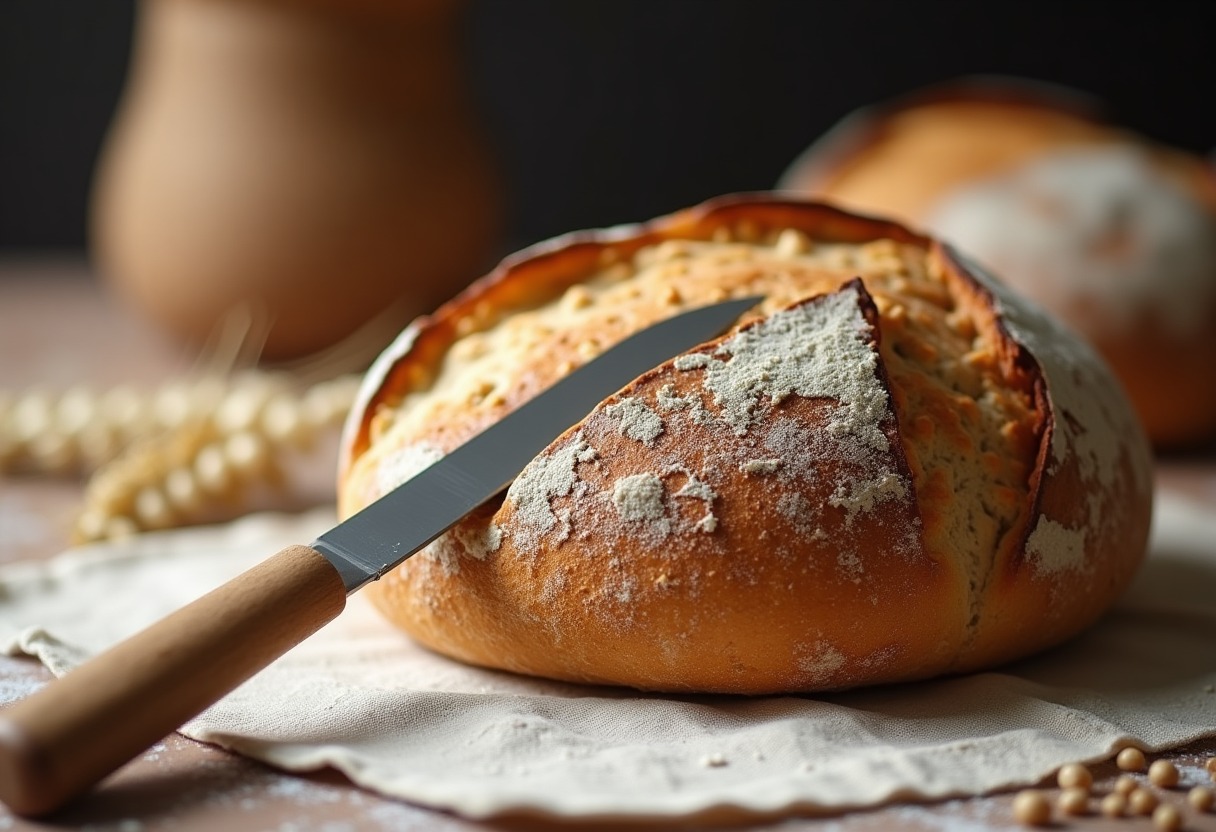
That moment when your blade drags through the dough instead of slicing clean, deflating hours of careful fermentation, confirms what every sourdough baker learns: scoring isn't just decoration—it's engineering. The right bread lame sourdough scoring tool makes the difference between controlled oven spring and blown-out sides.
Why Your Scoring Tool Determines Sourdough Success
Scoring controls gas expansion during baking by creating predetermined weak points in the dough's surface tension. Without proper scoring, built-up CO2 from fermentation finds random escape routes, creating irregular tears and preventing the dramatic "ear" formation that signals proper oven spring.
A sharp blade cuts through the surface membrane cleanly, typically 1/4 to 1/2 inch deep, allowing controlled expansion. King Arthur Baking explains that the angle and depth of cuts directly influence how the loaf opens in the oven—shallow cuts create subtle splits while deeper angled cuts form pronounced ears.
The timing window for scoring is narrow. Once shaped dough reaches 80-90% proof, the surface tension peaks. Miss this window with a dull blade, and you'll compress rather than cut, leading to poor oven spring and dense crumb near the crust.
Essential Bread Lame Types and Their Applications
Traditional curved lames use standard double-edge razor blades held in a handle at a slight angle. The curve creates the ideal 30-45 degree scoring angle automatically, making them foolproof for beginners learning How To Score Sourdough. The curved design keeps your hand positioned correctly for consistent depth and prevents the blade from catching in sticky dough.
Straight lames offer more versatility for decorative scoring patterns but require developed technique to maintain proper angles. They excel at cross-hatching, wheat stalks, and geometric patterns where precise straight lines matter more than dramatic ear formation. Professional bakers often prefer straight lames for their control over complex designs.
→ Shop curved bread lame on Amazon provides the easiest path to consistent results, while → Shop sourdough scoring tool on Amazon opens broader options for different scoring styles.
Razor blade holders designed specifically for baking feature ergonomic grips and blade guards for safety. Unlike disposable craft knife blades, purpose-built bread scoring tools maintain consistent blade exposure and angle, critical factors for clean cuts through high-hydration dough.
UFO lames (Grignette-style tools) combine the benefits of traditional lames with modern ergonomics. Their disc-shaped design provides multiple grip options and blade angles in one tool, making them versatile for both functional and decorative scoring.
Blade Selection: Double-Edge vs Single-Edge Razors
| Blade Type | Sharpness Duration | Cost per Score | Best Application | Replacement Frequency | |------------|-------------------|----------------|------------------|---------------------| | Double-edge razor | 15-20 loaves | $0.02-0.05 | Clean single cuts | Weekly for daily bakers | | Single-edge blade | 8-12 loaves | $0.08-0.12 | Decorative patterns | Every 3-4 days | | Craft knife blade | 5-8 loaves | $0.15-0.25 | Detail work | Every 2-3 days | | Fixed lame blade | 20-30 loaves | $0.10-0.20 | Consistent scoring | Bi-weekly |
→ Shop double edge razor blades on Amazon offers the most economical option for high-volume baking. Quality matters—cheap blades dull quickly and can have microscopic nicks that tear dough fibers rather than cutting cleanly.
Double-edge safety razor blades designed for shaving provide the sharpest, thinnest cutting edge. Feather brand blades maintain their edge longest, while Astra and Derby blades offer good performance at lower cost. Break these blades in half for safer handling—the sharp corners on full blades can catch and tear.
Single-edge blades work better for intricate decorative scoring because their thicker profile provides more control for detailed cuts. However, they dull faster when cutting through the tough surface of well-developed dough.
Product Recommendations for Every Scoring Style
Classic Curved Lames: Wire End Grignette and Breadtopia curved lames represent the gold standard for functional scoring. Their thin wire handles flex slightly under pressure, providing tactile feedback for consistent depth. The slight curve positions your hand naturally for the correct 30-degree angle.
Professional Straight Lames: → Shop bread lame on Amazon reveals options from $15-40. Look for handles that feel comfortable in your scoring grip—typically a pinch between thumb and index finger. Bamboo and wood handles provide better grip than metal when your hands are floury.
UFO/Grignette Lames: These modern designs excel for bakers who score daily. The disc shape fits naturally in your palm, and multiple blade positions allow quick angle adjustments without repositioning your grip. Expect to pay $30-60 for quality versions.
Razor Blade Holders: Purpose-built holders like the Breadtopia lame or Wire End designs protect your fingers and maintain consistent blade exposure. Avoid makeshift solutions—proper tools designed for → Shop razor blade holder baking on Amazon prevent accidents and improve results.
Budget-Friendly Options: A simple craft knife with fresh #11 blades works for occasional baking, though blade replacement costs add up quickly. Sharp paring knives can score bread but rarely achieve the clean cuts needed for dramatic ear formation.
Advanced Scoring Techniques Most Guides Skip
Temperature matters more than most bakers realize. Cold dough from overnight retardation scores cleaner because the surface firms up, reducing drag on the blade. If your dough feels sticky, place it in the refrigerator for 15-30 minutes before scoring.
Blade angle determines ear height and direction. Scoring at 30 degrees creates moderate ears, while 45-degree cuts produce more dramatic opening. For maximum ear formation, angle the blade so it cuts slightly under the dough surface rather than straight down—this creates an overhanging flap that lifts during oven spring.
Pattern timing requires understanding your dough's behavior. Score your primary cut first while the surface tension is highest, then add decorative elements. Secondary cuts should be shallower to prevent over-weakening the structure.
Professional bakers often mist scored loaves lightly before baking to prevent the cuts from sealing during the first few minutes in the oven. This technique works especially well with lower-hydration doughs that tend to form a skin quickly.
Steam timing coordinates with scoring depth. Deeper cuts need longer steam periods to prevent the edges from setting before full expansion occurs. Match your Best Dutch Ovens For Sourdough 2026 steam schedule to your scoring style.
FAQ
How often should I replace razor blades in my bread lame? Replace blades every 15-20 loaves for optimal performance, or immediately when you notice dragging rather than clean cutting. Dull blades compress dough fibers instead of severing them, leading to poor oven spring and uneven opening. Signs of a dull blade include jagged cut edges, resistance when scoring, and cuts that seem to "heal" or close up during baking. Professional bakers often change blades daily during busy periods.
What's the difference between lame vs knife scoring for sourdough? Lames create thinner, cleaner cuts that open more predictably during baking, while knives tend to compress dough edges and create wider, less controlled openings. The thin razor blade in a lame slices through surface tension with minimal pressure, preserving the dough structure underneath. Knives, even sharp ones, have thicker profiles that push dough aside rather than cutting cleanly, often resulting in deflated areas around scores and irregular ear formation.
Can I score sourdough without a dedicated bread lame? Sharp razor blades held carefully between fingers work for emergency scoring, but proper lames provide better control and safety. A fresh craft knife blade can substitute temporarily, though it dulls quickly on tough dough surfaces. Kitchen knives rarely achieve the precision needed for clean scoring—their thickness creates drag that can deflate well-proofed dough. For consistent results and safety, invest in a proper scoring tool designed specifically for bread.
What angle should I hold my bread lame when scoring? Hold the lame at 30-45 degrees to the dough surface for optimal ear formation, with the blade angled slightly toward the center of the loaf. Shallow angles create dramatic ears but risk cutting too deep, while steep angles produce subtle openings but better structural integrity. The blade should cut approximately 1/4 to 1/2 inch deep, depending on dough hydration—higher hydration doughs need shallower cuts to prevent over-expansion.
Why do my scored cuts close up during baking? Cuts close when the blade is dull, the scoring is too shallow, or the dough is under-proofed and lacks sufficient gas pressure for expansion. Fresh, sharp blades create clean cuts that maintain their opening, while dull blades compress dough fibers that can spring back together. Under-proofed dough hasn't developed enough internal pressure to force cuts open during oven spring. Ensure your dough reaches 80-90% proof before scoring, and score with confidence in one smooth motion rather than hesitant, multiple passes.
The difference between amateur and professional-looking sourdough often comes down to that decisive moment when blade meets dough—make it count with the right tool for the job.
Some links on this page are affiliate links. We may earn a small commission if you purchase through them, at no extra cost to you.
As an Amazon Associate we earn from qualifying purchases. This article contains affiliate links; if you buy through them we may earn a small commission at no additional cost to you.