Water makes the difference between a dense brick and an open, custardy crumb. The hydration percentage in your sourdough — the ratio of water to flour by weight — controls everything from how your dough feels in your hands to the final texture on your plate.
Why Hydration Percentage Drives Everything in Sourdough
Hydration percentage represents the total water content (including water from your starter) divided by total flour weight, multiplied by 100. A 75% hydration dough contains 750g water for every 1000g flour. This ratio determines protein development, gluten formation, and enzymatic activity during fermentation.
Higher hydration creates more extensible dough with larger, irregular holes and a softer crumb. The additional water allows enzymes to work more efficiently, breaking down starches into sugars that feed wild yeast. King Arthur Baking explains that water acts as a solvent, dissolving proteins and enabling the chemical reactions that create flavor and structure.
Lower hydration produces tighter crumb structure with more uniform holes. The dough holds its shape better during proofing and baking, making it easier for beginners to handle. Professional bakers typically start apprentices with 65-70% hydration before progressing to wetter doughs.
Your flour's protein content directly impacts how much water it can absorb. Bread flour (12-14% protein) handles higher hydration than all-purpose flour (10-12% protein) because stronger gluten networks trap more water molecules.
Understanding the Hydration Spectrum
Most sourdough recipes fall between 65% and 85% hydration. Each range produces distinct characteristics that affect mixing, shaping, and final results.
65-70% Hydration: The Learning Zone These lower hydration doughs feel manageable and forgiving. The dough holds its shape during bulk fermentation and shapes easily with basic techniques. Expect a tighter, more uniform crumb similar to sandwich bread. This range works well for pan loaves and structured shapes like batards.
70-75% Hydration: The Sweet Spot
Most artisan bakers work in this range for balanced handling and open crumb. The dough requires gentle folding techniques but responds predictably to shaping. You'll achieve moderate hole structure with good rise and a tender but not custard-like texture.
75-80% Hydration: Advanced Territory These doughs demand confident handling and proper technique. Expect sticky, extensible dough that spreads during bulk fermentation. The payoff comes in distinctly open crumb with irregular holes and incredibly soft texture. Requires strong flour and developed folding skills.
80%+ Hydration: Expert Level Ultra-high hydration creates almost liquid-like dough during mixing. These breads produce the most open, irregular crumb structure with large holes and custardy texture. Handling requires advanced techniques like coil folds and careful timing. Best suited for experienced bakers with proper digital kitchen scales for precision.
Hydration's Impact on Bread Characteristics
| Hydration Range | Crumb Structure | Handling Difficulty | Best Applications | Typical Rise | |-----------------|-----------------|-------------------|------------------|--------------| | 65-70% | Tight, uniform holes | Beginner-friendly | Pan loaves, sandwich bread | Predictable, upward | | 70-75% | Moderate openness | Intermediate | Boules, batards | Good height with spread | | 75-80% | Open, irregular holes | Advanced | Artisan loaves, focaccia | Lower profile, wider spread | | 80%+ | Very open, custardy | Expert level | Ciabatta-style, specialty | Flat, extremely open |
Higher hydration affects more than texture. Fermentation proceeds faster in wetter doughs because enzymes move more freely through the increased water content. This means shorter bulk fermentation times and more active starter requirements.
The crust also changes dramatically. High hydration breads develop thinner, more flexible crusts that crisp beautifully but soften quickly. Lower hydration creates thicker, more substantial crusts that maintain crunch longer after baking.
Temperature sensitivity increases with hydration. A 65% hydration dough tolerates temperature fluctuations better than an 80% dough, which can overproof rapidly in warm conditions or stall completely when cold.
Essential Tools for Hydration Success
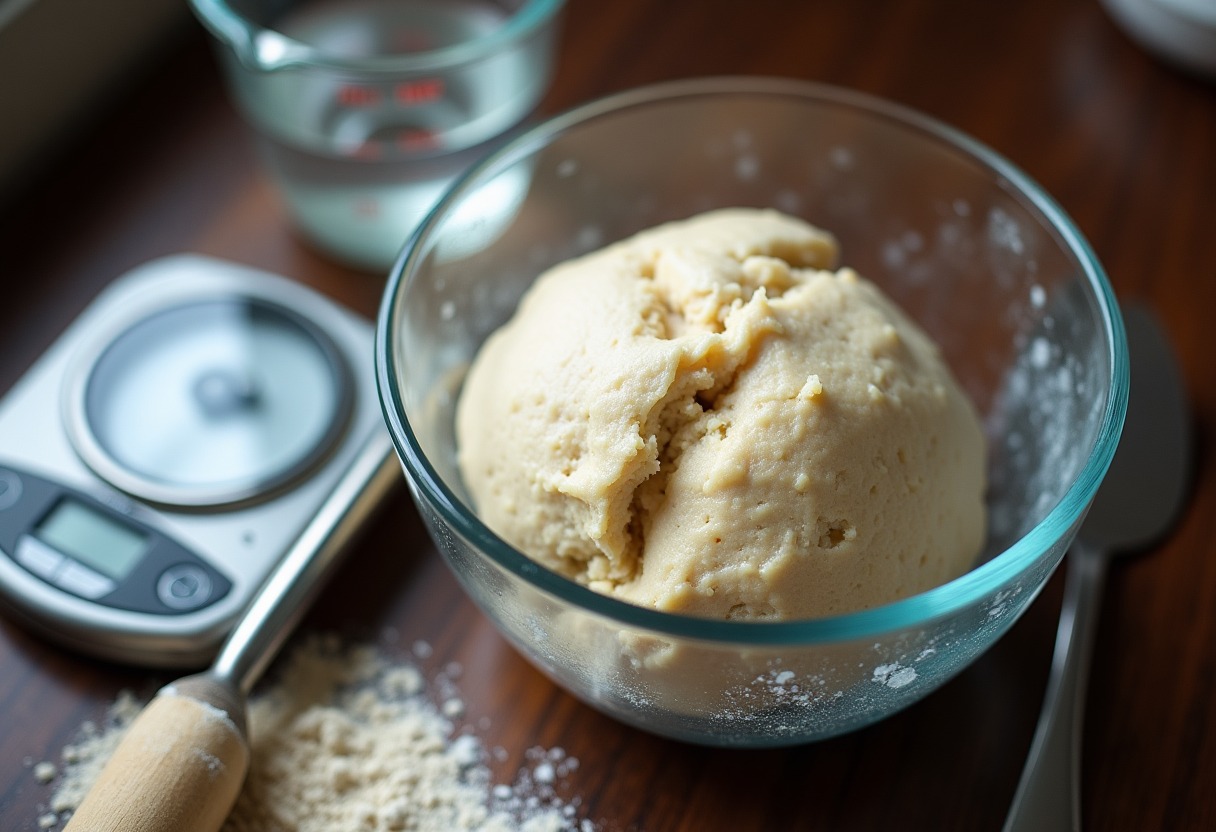
Accurate measurement becomes critical as hydration increases. Digital kitchen scales with 1-gram accuracy prevent the compounding errors that turn a 75% hydration recipe into an unmanageable mess.
Wide glass mixing bowls provide the space needed for folding high-hydration doughs without deflating the developing gluten structure. Narrow bowls force you to compress the dough, breaking the delicate protein networks that trap gas during fermentation.
A quality bench scraper becomes indispensable for high hydration work. Metal scrapers with thin, flexible edges let you manipulate sticky dough without it adhering to your hands. Plastic alternatives work but lack the precision needed for clean cuts and folds.
Dough whisks excel at initial hydration, especially for high-hydration recipes where traditional mixing methods struggle. The wire loops cut through flour more efficiently than wooden spoons, creating better initial gluten development.
For measuring water precisely, graduated liquid measuring cups with clear markings prevent the estimation errors that plague bakers working by volume. Glass versions resist staining and provide better visibility than plastic alternatives.
Advanced Hydration Techniques Most Guides Skip
Autolyse Extension for High Hydration Standard autolyse periods of 30-60 minutes become insufficient above 75% hydration. Extend autolyse to 90-120 minutes for high hydration doughs, allowing flour proteins more time to fully hydrate. This reduces mixing time and creates better initial gluten development before fermentation begins.
Temperature-Based Hydration Adjustments Cold environments require 2-3% higher hydration to maintain dough consistency because cooler temperatures slow protein hydration. Conversely, hot kitchens above 78°F benefit from 2-3% hydration reduction to prevent overly slack dough. Track your kitchen temperature and adjust accordingly.
Flour-Specific Hydration Mapping Each flour brand absorbs water differently based on protein quality, ash content, and processing methods. King Arthur Bread Flour typically handles 2-3% higher hydration than Gold Medal equivalents. Create a reference chart for your preferred flours, noting maximum comfortable hydration levels for consistent results.
Progressive Hydration Building Instead of adding all water at once in high-hydration recipes, reserve 10-15% of the water for gradual incorporation during bulk fermentation. Add this reserved water during the second and third folds, allowing the developing gluten network to accommodate the additional moisture more effectively.
Starter Hydration Calculations Many bakers forget to account for water content in their starter when calculating total hydration. A 100% hydration starter (equal parts flour and water by weight) contributes both flour and water to your final percentage. If using 100g of 100% starter, you're adding 50g flour and 50g water to your totals.
For more precision in your sourdough journey, our Sourdough Starter Complete Guide covers maintaining consistent starter hydration that supports your target bread hydration levels.
FAQ
How do I calculate hydration percentage for my sourdough recipe? Add up all water sources (including water from your starter), divide by total flour weight, then multiply by 100. For example: 400g bread flour + 50g starter flour = 450g total flour. 350g water + 50g starter water = 400g total water. 400 ÷ 450 × 100 = 89% hydration. Remember that starter contains both flour and water — a 100% hydration starter is half flour, half water by weight.
What's the highest hydration level beginners should attempt? Stay between 65-72% hydration for your first dozen loaves. This range provides enough water for good fermentation and decent crumb while remaining manageable during shaping and bulk fermentation. Once you can consistently shape 70% hydration dough without it sticking to everything, gradually increase by 2-3% per recipe until you find your comfort limit.
Why does my high hydration dough spread instead of rising up? High hydration doughs naturally spread more than they rise due to gravity and reduced gluten strength from excess water. This is normal behavior above 78% hydration. Ensure your gluten development is complete through proper folding, use a shorter bulk fermentation time, and shape with confident, quick movements. Consider using a proofing basket to maintain structure during final proof.
Can I adjust hydration mid-recipe if my dough feels wrong? Yes, but make small adjustments — add 1-2 tablespoons of water for dry dough, or 1-2 tablespoons flour for overly wet dough. Mix thoroughly and let rest 15 minutes before evaluating again. Large adjustments will throw off your fermentation timing and final ratios. Prevention through accurate measurement beats correction every time.
How does hydration affect baking time and temperature? Higher hydration breads typically require 5-10 minutes longer baking time because the extra water needs to evaporate. Start with your normal temperature but be prepared to extend time or reduce temperature by 25°F if the crust browns too quickly. The internal temperature should still reach 205-210°F regardless of hydration level. Your Dutch oven helps create the steam environment these wet doughs need for proper spring.
Hydration percentage is your most powerful tool for controlling sourdough outcomes — master it, and you master the bread.
Some links on this page are affiliate links. We may earn a small commission if you purchase through them, at no extra cost to you.
As an Amazon Associate we earn from qualifying purchases. This article contains affiliate links; if you buy through them we may earn a small commission at no additional cost to you.