
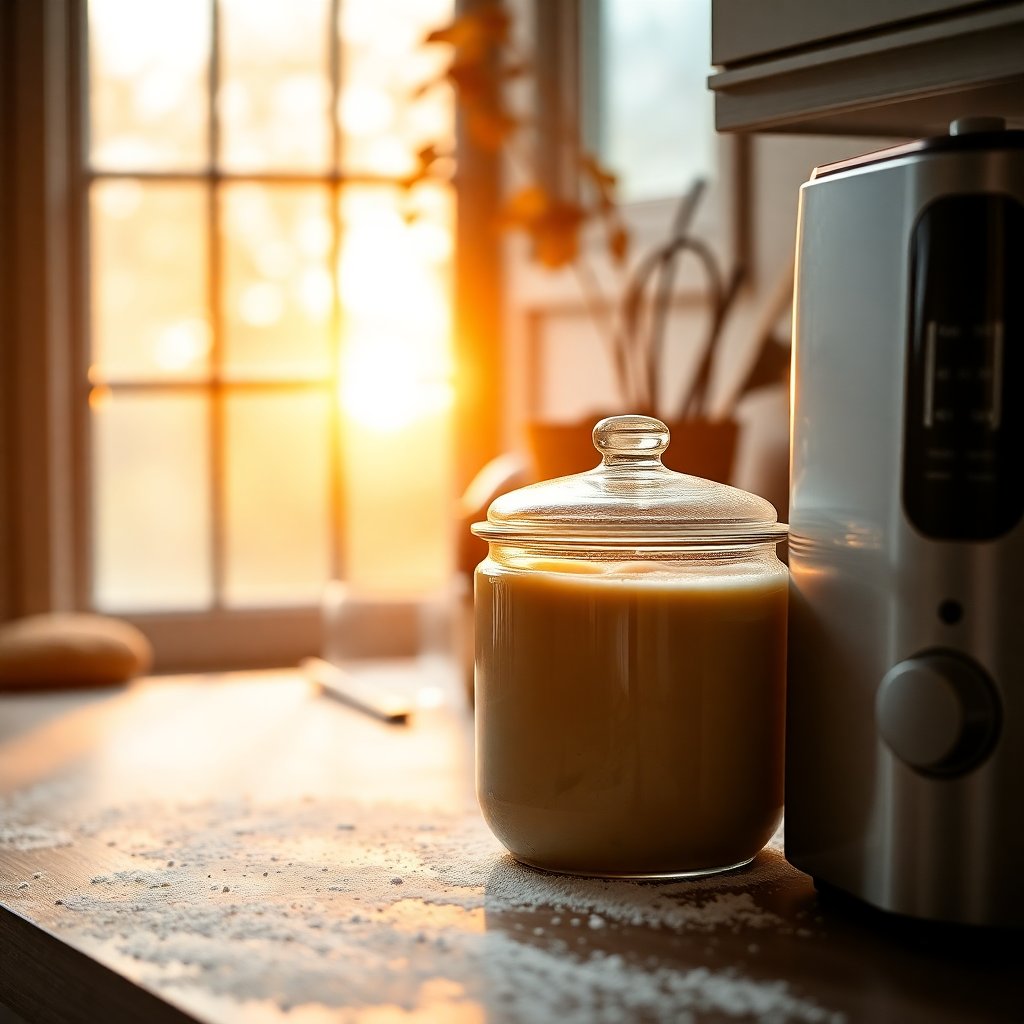
King Arthur Baking and GE Appliances' FirstBuild lab put a $179.99 gadget on kitchen counters nationwide on May 1, and it exists to solve the single most common reason people quit sourdough: the endless feed-and-discard chore. The Sourdough Sidekick reads your kitchen's ambient temperature and "microfeeds" your starter on its own, keeping it alive for up to seven days without a scrap of discard. After hitting its Indiegogo goal in twelve minutes, it's now sitting in stock right as cooler fall weather pulls lapsed bakers back to their crocks.
So the obvious question, especially with baking season warming up: does anyone actually need a robot to feed flour and water to a jar of fermented paste? The honest answer is "no, but" — and the "but" is more interesting than the marketing.
What the Sourdough Sidekick Actually Does
The Sidekick is a starter-tending appliance, not a bread machine. It doesn't mix dough, it doesn't bake, and — this is the limitation nobody puts on the box in big letters — it does not create a starter from scratch. You have to seed it with roughly 15 grams of an existing, active starter to begin. If you're starting from zero flour and water, this device does nothing for you until you've already done the two-week job of raising a culture yourself.
What it does do, once seeded, is automate maintenance. Inside the unit sits a water tank and a flour hopper. The device dispenses small, precise doses of each into a King Arthur glass crock on a schedule, stirs with an included paddle, and adjusts the timing and amount based on how warm or cool your kitchen is. Fermentation speeds up in heat and slows in cold, so a temperature-aware feeder is genuinely smarter than a fixed schedule — which is the actual technical argument in its favor.
It ships with the device, water tank, flour hopper, a King Arthur glass crock and lid, the paddle, and a power supply. You can read the full launch details in FirstBuild's official press release, and it's sold at SourdoughSidekick.com and KingArthurBaking.com.
As an Amazon Associate we earn from qualifying purchases. The links below go to gear we'd recommend regardless.
Three Modes, Explained
The Sidekick runs in one of three modes, and understanding them tells you a lot about whether it fits how you bake.
Auto mode is the headline feature. You set a target amount and rough timing, and the device adjusts the actual feed schedule to your kitchen temperature. This is the "set it and forget it" mode that keeps a starter healthy for up to seven days with no discard. It's aimed squarely at people who travel, forget, or simply resent the daily ritual.
Ratio mode applies traditional feeding ratios — think 1:1:1 or 1:5:5 flour-to-water-to-starter — at intervals you choose. If you already know your starter thrives on a specific ratio, this mode respects that instead of overriding it. This is the mode experienced bakers will gravitate toward.
Custom mode is manual control: you decide the amounts and timing yourself, and the device just executes. It's there for the tinkerers who want a dispensing robot but not a decision-making one.
The through-line is that the Sidekick is trying to serve both the beginner who wants zero thinking and the veteran who wants precision. Whether one box can genuinely do both is the real review question.
The Problem It's Solving Is Real
Here's the part worth taking seriously. The number-one reason people abandon sourdough isn't bad bread — it's the maintenance. A starter wants regular feeding, and every feeding traditionally produces "discard," the portion you remove before adding fresh flour and water so the culture doesn't outgrow its jar. Discard piles up. People feel guilty throwing it out, feel obligated to bake discard crackers they don't want, and eventually just... stop. The starter dies in the back of the fridge and the hobby dies with it.
The Sidekick's genuine innovation is the microfeeding approach: instead of large feeds that generate large discard, it does frequent tiny feeds that keep the culture balanced without the excess. No discard for up to seven days is not a gimmick — it directly removes the friction point that kills the hobby for most beginners.
If discard guilt is what's stopping you, though, know that there are lower-tech fixes too. Keeping a smaller starter and feeding by weight solves most of the discard problem for free. A good digital kitchen scale that reads in grams is the single most useful $15 you'll spend on sourdough, with or without a robot. Precision feeding is what keeps a starter predictable, and a scale gets you 80% of the Sidekick's benefit at roughly 8% of the price.
Starter Maintenance Fundamentals (The Skills the Robot Replaces)
Before deciding whether to outsource this, it helps to know exactly what you'd be outsourcing. A healthy starter needs three things: flour, water, and a rhythm.
Feeding. You discard down to a small amount of starter, then add fresh flour and water in a consistent ratio. The fresh food restarts vigorous fermentation. Do this once a day at room temperature, or roughly once a week if you keep the starter refrigerated between bakes.
Reading the rise. A well-fed starter roughly doubles, domes, and then begins to fall. That peak is when it's most active and best for baking. Learning to read the peak — by sight, or the float test where a spoonful floats in water — is a core skill the Sidekick's Auto mode quietly does for you.
Temperature awareness. Warm kitchens ferment fast; cold kitchens ferment slow. This is exactly why fall matters. As mid-August cools into September, room temperatures drop and starters that were sprinting in July suddenly need longer between feeds. Manual bakers adjust by feel. The Sidekick adjusts by sensor.
None of this is hard, but it is a habit. The device is essentially selling you out of building that habit. Whether that's worth it depends entirely on the kind of baker you are — much like choosing between a jar and a proper proofing setup, a decision we get into in our guide to gifts for sourdough bakers where the practical basics always beat the gadgets.
Who the Sidekick Is Genuinely For
After weighing the launch details and the way real bakers actually behave, the Sidekick makes honest sense for a few specific people:
- Frequent travelers. If you're away three days a week, a temperature-aware auto-feeder is a legitimately good answer to keeping a culture alive without a starter-sitter.
- Serial starter-killers. If you've raised and lost four starters because life got busy, spending $180 to break that cycle may genuinely be cheaper than the frustration.
- Discard-haters. If the waste is what turned you off, the no-discard microfeeding directly addresses your exact objection.
- Consistency obsessives. Bakers who want a rigorously identical starter feed every single day, temperature-corrected, will appreciate the precision Ratio mode offers.
For these people, the Sidekick isn't about capability — it's about removing a friction point that a jar can't. That's a real value proposition.
Who Should Keep the Jar and Rubber Band
For most home bakers, though, the honest recommendation is to skip it, at least for now. A traditional starter costs $0. It needs flour, water, a clean jar, a rubber band to mark the rise, and about five minutes of attention a day. That's it. There is nothing a $180 device does that a disciplined weekly refrigerator feeding can't accomplish for free.
If you bake occasionally, keep your starter in the fridge, and feed it once a week before a bake, the Sidekick solves a problem you don't have. Spend the money on gear that changes the bread instead of the maintenance. A quality banneton proofing basket does more for your final loaf's structure and appearance than any feeder, and a good Dutch oven for bread baking is the single biggest upgrade to crust and oven spring you can buy — as we break down in detail in our roundup of the best Dutch ovens for sourdough.
And if the appeal is really just having a tidy, reliable home for your culture, a simple sourdough starter jar kit with a wide mouth and a marked band covers the fundamentals for a fraction of the cost.
The Honest Verdict
The Sourdough Sidekick is a well-designed convenience product from two brands — King Arthur and GE's FirstBuild — that know what they're doing. The temperature-aware microfeeding is smart, the no-discard promise is real, and the three modes cover both beginners and precision bakers. Forbes' personal shopper team put the broader King Arthur starter ecosystem through its paces here if you want another perspective before you buy.
But it's convenience and consistency, not necessity. It cannot start a culture for you, it costs $180, and it automates a skill that's genuinely worth learning. Buy it if you're a traveler, a repeat starter-killer, or someone whose hobby lives or dies on the discard chore. Skip it if you have five minutes a day and a jar.
The best time to keep a starter alive is the same whether you use a robot or a rubber band: right now, as fall baking season begins. Sharpen the fundamentals first — like clean scoring technique, which actually shows up in your bread — and let the gadget be a genuine upgrade rather than a crutch you bought before you learned to walk.
Frequently Asked Questions
Does the Sourdough Sidekick create a starter from scratch?
No. This is its key limitation. You must add roughly 15 grams of an existing, active starter to begin. The device maintains a culture; it does not raise one from flour and water.
How long can it keep a starter without discard?
Up to seven days in Auto mode. It uses frequent microfeedings — small, precise doses adjusted for kitchen temperature — instead of large feeds, which is what eliminates the discard.
How much does the Sourdough Sidekick cost?
The MSRP is $179.99. It launched nationwide on May 1, 2026, after an Indiegogo campaign, and is sold at SourdoughSidekick.com and KingArthurBaking.com.
Do I actually need it to bake good sourdough?
No. A traditional starter costs nothing and needs only flour, water, and about five minutes a day. The Sidekick is a convenience and consistency tool, best suited to travelers, discard-haters, and bakers who keep killing their starters.
As an Amazon Associate we earn from qualifying purchases. This article contains affiliate links; if you buy through them we may earn a small commission at no additional cost to you.