Your wet sourdough spreads across the counter during shaping, sticks to your hands during folds, and leaves a film of expensive flour in your mixing bowl. You can scrape at it with your fingers, but you're leaving half your dough behind and mangling your gluten structure in the process.
Two tools fix this: a rigid metal bench scraper that cuts, divides, and cleans, and a flexible plastic bowl scraper that folds, turns, and retrieves every gram of dough from curved surfaces. They're not interchangeable. Each does specific jobs that the other can't handle, and once you understand the distinction, your dough handling becomes faster, cleaner, and gentler on the gluten network you've spent hours building.
Why You Need Both Types of Dough Scrapers
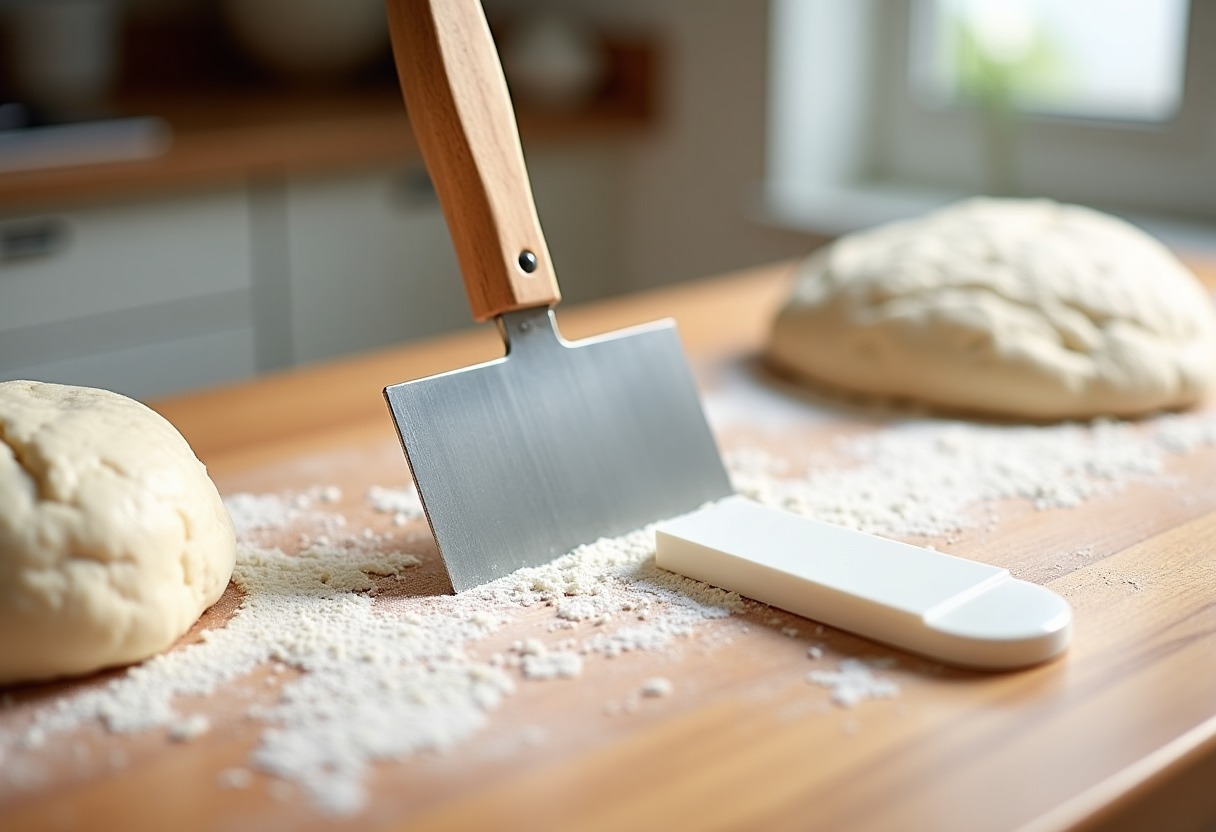
A sourdough bench scraper (also called a bench knife or dough cutter) is a rigid rectangular tool — typically stainless steel — with one straight cutting edge and a handle. It excels at portioning dough, scraping work surfaces clean, and creating defined edges when you're shaping. The rigidity matters: you can apply downward force to cut through 1000g of dough in one motion, then use that same straight edge to scoop and transfer without stretching.
A bowl scraper (or plastic dough scraper) flexes to match curved surfaces. Usually made from food-grade polypropylene, it has one curved edge that hugs your mixing bowl and one straight edge for bench work. During bulk fermentation, you'll use this to perform stretch-and-folds without degassing the dough. After mixing, it retrieves wet dough from bowl walls without leaving residue.
King Arthur Baking has documented bench scraper techniques across professional and home contexts — their test kitchen uses metal scrapers for portioning and plastic for coil folds during high-hydration fermentation.
The functional difference comes down to material stiffness. Metal holds its shape under pressure, making clean cuts and straight scrapes. Plastic yields to curves and conforms to angles, making it ideal for manipulating sticky, extensible dough without tearing. For sourdough work — especially at 75%+ hydration — you need both.
Metal Bench Scrapers: When Rigidity Matters
Metal bench scrapers handle tasks where flex would be a liability. When you're dividing a sourdough batch after bulk fermentation, a stainless steel edge cuts through the dough mass without dragging or compressing. This matters more than it sounds: dragging a dull or flexible tool through dough redistributes tension unevenly and can deflate air pockets you've carefully developed.
Primary uses for metal bench scrapers:
- Portioning: Cutting dough into equal pieces for boules or rolls with one decisive motion
- Bench cleaning: Scraping dried or wet dough from wood, granite, or composite surfaces
- Squaring edges: Creating defined corners during pre-shaping and final shaping
- Transferring: Scooping shaped dough and moving it to a banneton without distortion
- Ingredient incorporation: Cutting butter into laminated dough or mixing dry ingredients
The best models have a beveled cutting edge that meets the work surface at a low angle, reducing friction. Handles should be welded or riveted — not glued — and positioned to keep your knuckles clear of the counter when scraping horizontally. Width matters: 6 inches handles most home baking, but smaller scrapers (4 inches) offer better control for tight shaping work.
→ Shop stainless steel bench scraper on Amazon
Look for scrapers with measurement markings etched into the blade. During pre-shaping, you can use these to gauge dough width and maintain consistent dimensions across multiple loaves.
Plastic Bowl Scrapers: The Folding and Retrieval Specialist
Plastic scrapers bend. That's the entire point. When you're performing stretch-and-folds during bulk fermentation, you need a tool that slides under the dough, flexes to lift a section, then stretches it upward and over without tearing the gluten strands. A rigid tool would either tear the dough or refuse to slide underneath cleanly.
Primary uses for bowl scrapers:
- Stretch-and-folds: Lifting and folding dough during bulk without deflation
- Coil folds: Gently lifting the dough mass from underneath for gentle strengthening
- Bowl cleaning: Scraping wet dough from mixing bowls with zero waste
- Dough transfer: Moving sticky dough from bowl to bench without hand contact
- Lamination: Spreading and folding during high-hydration lamination techniques
The curved edge should match the radius of your most-used mixing bowls. Most commercial bowl scrapers have one edge with a tight radius (for narrow containers like starter jars) and one with a broader curve (for 4-6 quart mixing bowls). The straight edge works for bench scraping when you don't need cutting force.
→ Shop plastic bowl scraper on Amazon
Flexibility varies by thickness. Scrapers around 1-2mm thick offer the best balance: stiff enough to hold their shape when you're scooping, flexible enough to conform to curves during folds. Thinner scrapers (under 1mm) tear more easily when catching on bowl edges or bench seams.
Bench Scraper vs Bowl Scraper: Comparison
| Feature | Metal Bench Scraper | Plastic Bowl Scraper | |-------------|-------------------------|--------------------------| | Primary function | Cutting, portioning, cleaning | Folding, retrieving, gentle manipulation | | Material | Stainless steel (occasionally aluminum) | Food-grade polypropylene or silicone | | Flexibility | Rigid — maintains straight edge under pressure | Flexible — conforms to curved surfaces | | Best for high-hydration dough | Initial portioning, final shaping | Stretch-and-folds, bowl retrieval | | Cleaning surfaces | Excellent on flat surfaces, removes dried dough | Limited on flat surfaces, excellent on curves | | Typical price range | $8-$25 | $3-$12 | | Durability | Decades with proper care | 2-5 years before edge wear |
Recommended Dough Scraper Types
Professional-grade stainless steel bench scraper: Look for models with a full tang handle (where the metal blade extends through the handle) and a beveled edge. Dexter-Russell and Lamson make versions that hold up through commercial use. Weight matters — heavier scrapers (4-5 oz) require less downward force for clean cuts.
→ Shop dough bench knife on Amazon
Flexible polypropylene bowl scraper: Generic versions work fine, but look for scrapers with dual-curve edges and thickness around 1.5mm. Avoid silicone bowl scrapers for sourdough work — they're too flexible for controlled folds and tend to slip rather than grip the dough.
Combination scraper sets: Several manufacturers sell sets with one metal bench scraper and 2-3 plastic bowl scrapers in different sizes. These make sense if you're outfitting a kitchen from scratch or looking for gifts for sourdough bakers.
→ Shop pastry scraper set on Amazon
Marked metal bench scrapers: Models with etched measurement lines (in inches or centimeters) help maintain consistent portion sizes when dividing dough. Particularly useful if you're making multiple loaves or rolls from a single batch.
→ Shop metal dough cutter on Amazon
Extra-wide bench scrapers: 8-inch models handle large batch work better than standard 6-inch scrapers. If you're regularly working with 1500g+ dough masses, the extra width reduces the number of cuts needed during portioning.
Using Scrapers During Critical Sourdough Stages
Mixing and autolyse: After combining flour and water for autolyse, use your bowl scraper to clean the bowl walls and ensure complete hydration. The curved edge catches unmixed flour pockets that fingers miss.
Incorporating starter and salt: Rather than kneading wet dough by hand, use the bowl scraper to perform a series of lifts and folds. Slide the curved edge under the dough, lift a section, stretch it upward, then fold it over the mass. Rotate the bowl 90 degrees and repeat. This Rubaud method develops gluten without adding excess flour to your hands.
Bulk fermentation folds: During the first 2-3 hours of bulk fermentation, perform stretch-and-folds every 30-45 minutes. Use the bowl scraper to gently lift the dough from underneath, stretch it upward until you feel resistance, then fold it over itself. The flexibility prevents tearing while still providing enough structure.
Transfer to bench: When bulk fermentation completes, use the bowl scraper to release the dough from the bowl walls, then tip it onto a lightly floured surface. Switch to your metal bench scraper for the next steps.
Pre-shaping: Use the metal bench scraper to gently push and tuck the dough into a round. Hold the scraper at a 45-degree angle, push it under the dough edge, then drag it toward you in a quarter-circle motion. The straight edge creates surface tension without tearing.
Final portioning: If you're making multiple loaves, use the metal bench scraper to divide the dough. Position the blade where you want to cut, then push straight down with even pressure. Rock the blade slightly side-to-side if needed, but avoid sawing motions that redistribute tension.
Final shaping: During the shaping sequence for boules or batards, use the metal bench scraper to create tension by dragging the dough toward you against the bench surface. The rigid edge catches the dough's underside and tightens the skin without deflating the interior.
Bench cleaning: After shaping, dried bits of dough stick to your work surface. Hold the metal bench scraper at a low angle (nearly parallel to the surface) and push firmly. The straight edge lifts dried dough without scratching wood or stone surfaces.
Maintenance and Longevity
Metal bench scrapers develop patina over time — that's normal and doesn't affect function. Wash by hand immediately after use to prevent dough from hardening in the handle joint. Dry thoroughly to prevent rust, especially if your scraper has a wooden handle. Never put metal bench scrapers in the dishwasher — the high heat can loosen rivets and warp the blade.
If your bench scraper develops a burr or rough edge, smooth it with 220-grit sandpaper followed by a pass on a leather strop. You want a clean edge, not a sharp one — bench scrapers aren't knives.
Plastic bowl scrapers wear out. The flexible edge develops nicks and tears after months of use, particularly if you're scraping against rough bowl surfaces or composite counters. When the edge becomes ragged, replace the scraper — damaged edges can tear dough rather than lift it cleanly.
Clean plastic scrapers with hot soapy water and dry immediately. They're dishwasher-safe, but hand washing extends their life. Store them flat rather than standing on edge to prevent warping.
FAQ
Do I really need both a metal bench scraper and a plastic bowl scraper for sourdough?
Yes, if you're working with high-hydration dough regularly. Metal scrapers cut and portion cleanly but can't perform the gentle lifting and folding needed during bulk fermentation. Plastic scrapers flex to retrieve every gram from bowls and fold dough without tearing, but they can't divide portions or clean surfaces effectively. Each tool has distinct mechanical properties that handle specific tasks better.
What's the ideal size for a sourdough bench scraper?
A 6-inch wide metal bench scraper handles most home baking — wide enough to cut through a standard boule in one motion, narrow enough for controlled shaping. If you regularly make batards or work with large batch sizes (1500g+), consider an 8-inch model. Bowl scrapers should match your primary mixing bowl's curve — most home bakers work best with scrapers that have a 4-5 inch curved edge.
Can I use a bench scraper instead of a dough whisk for mixing?
Not effectively for initial mixing, but yes for fold-in mixing methods like the Rubaud technique. A bowl scraper excels at this: slide it under the dough, lift and stretch, fold over, rotate. This develops gluten in wet doughs without adding flour to your hands. For dry doughs or initial flour-water combination, a dedicated dough whisk or wooden spoon still works better.
How do I prevent dough from sticking to my bench scraper during shaping?
Lightly flour the bench scraper edge before contact, but use minimal flour — excess changes your dough's hydration level. The key is technique: keep the scraper moving rather than letting it sit in contact with sticky dough. For plastic scrapers during folds, slight moisture on the edge can actually help — wet your fingers and transfer a film of water to the scraper's edge.
Should I choose a bench scraper with measurements marked on it?
If you're making multiple loaves from one batch or often portion rolls, yes. Etched measurement lines help maintain consistent sizing without eyeballing each cut. For single-loaf bakers who rarely divide dough, measurements add minimal value. The markings should be laser-etched or stamped — printed measurements wear off quickly.
The Right Tool for Each Motion
The best sourdough scrapers disappear into your process — you stop thinking about the tool and focus entirely on reading the dough. That only happens when you're using the right scraper for the task at hand: metal when you need force and precision, plastic when you need flexibility and retrieval. Both earn their space on your bench.
Some links on this page are affiliate links. We may earn a small commission if you purchase through them, at no extra cost to you.
As an Amazon Associate we earn from qualifying purchases. This article contains affiliate links; if you buy through them we may earn a small commission at no additional cost to you.