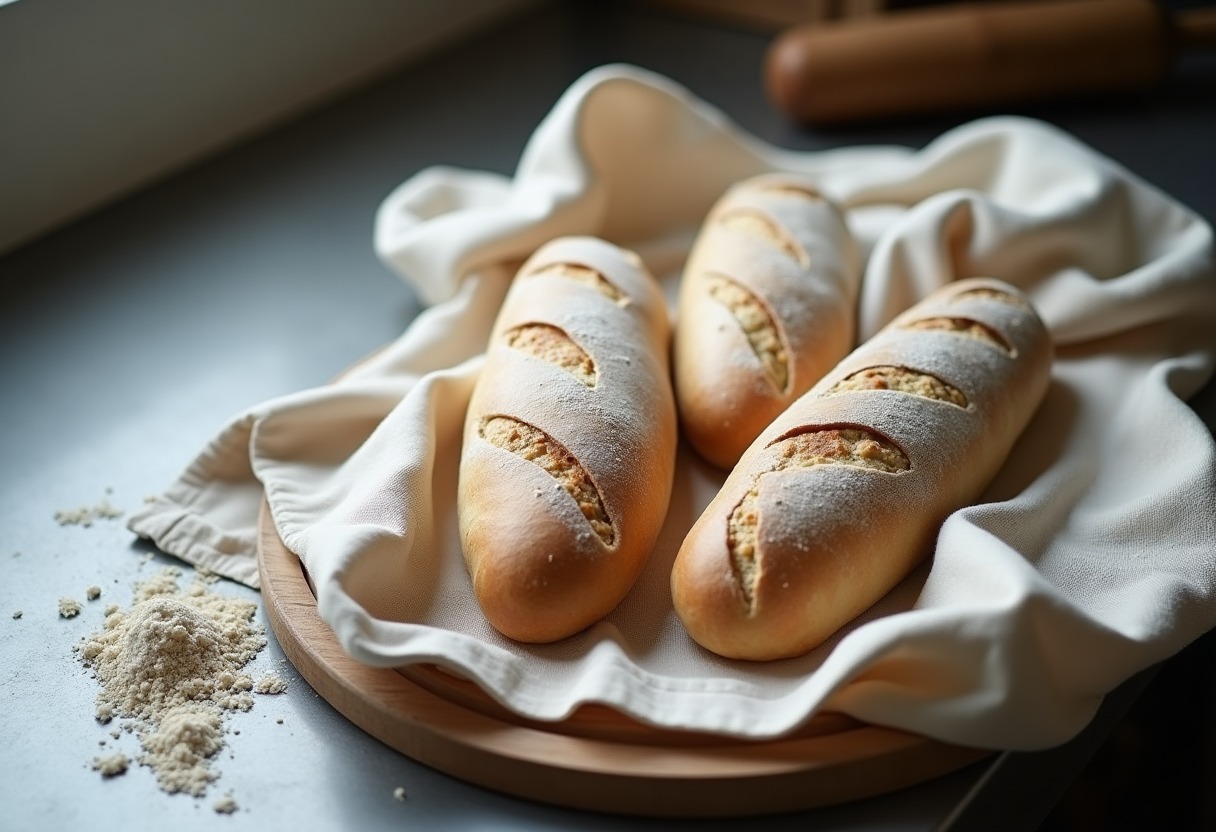
A wet baguette dough slumps sideways during final proof, and you end up baking flat, pale oblongs instead of cylinders with proud ears. The problem isn't your shaping or your starter — it's that you're proofing on a smooth kitchen towel that can't wick moisture or hold structure. A proper bread proofing cloth, specifically a linen couche, creates the friction and moisture management that lets high-hydration doughs hold their shape during the critical 45-90 minutes before baking.
Why Linen Couches Work for Baguettes and Batards
Baguettes and batards are proofed seam-side up, without the rigid support of a banneton. The fabric itself becomes the structural element. According to King Arthur Baking, linen's natural texture creates enough friction to prevent lateral spreading while its absorbent fibers pull surface moisture away from the dough, developing a thin skin that holds shape during transfer to the oven.
Cotton kitchen towels lack both properties. Cotton absorbs moisture but doesn't wick it away from the dough surface — it just gets damp and sticky. Synthetic fabrics repel moisture entirely, leaving dough surfaces wet and prone to sticking. Linen's plant-fiber structure creates capillary action that moves moisture from dough surface into the weave, then allows it to evaporate.
The fabric weight matters more than most bakers realize. Professional bakeries use 100% flax linen between 7-10 oz per square yard. Lighter fabrics (under 6 oz) don't create enough structure for wet doughs above 70% hydration. Heavier canvas weights (12+ oz) absorb too much moisture and become stiff, making dough removal difficult. The 7-10 oz range balances absorption with flexibility.
What to Look for in a Sourdough Couche
Fabric composition should be 100% flax linen with no cotton blends. Flax fibers are longer and stronger than cotton, which means they maintain their structure through repeated flour applications and washings. The weave should be tight enough that you can't easily see through it when held to light, but not so dense that it feels like canvas duck cloth.
Sizing requirements depend on your batch sizes. A 26-inch by 35-inch couche holds three standard baguettes (approximately 14 inches long each) with proper pleating between loaves, or four batards (10-12 inches). If you consistently bake two baguettes at a time, a 18-inch by 26-inch piece works without wasted fabric. Add 6 inches of length per additional baguette you plan to proof simultaneously.
Hemmed edges prevent fraying during the pleating process, where you fold the fabric to create raised barriers between dough pieces. Unhemmed edges deteriorate within 10-15 uses, creating lint that sticks to dough surfaces. Factory-hemmed edges cost slightly more but last through years of weekly baking.
Here's how different fabric specifications affect performance:
| Specification | Professional Range | Why It Matters | |--------------|-------------------|----------------| | Fabric weight | 7-10 oz per sq yard | Balances moisture absorption with handling flexibility | | Weave tightness | 12-16 threads per inch | Prevents excessive flour penetration while maintaining texture | | Typical dimensions | 18"x26" to 26"x35" | Accommodates 2-4 standard baguettes with proper spacing | | Fiber source | 100% flax linen | Provides superior wicking and durability vs cotton blends |
Recommended Bread Linen Cloths and Couches
Professional Baker's Linen Couche — The standard choice for serious baguette bakers who proof 2-3 times weekly. These are typically 26x35 inches of 9 oz flax linen, large enough for four baguettes with proper pleating. The fabric arrives stiff and needs proper break-in (details below), but once seasoned it develops the perfect balance of structure and flexibility. → Shop baker's linen couche on Amazon
Heavy Flax Linen Proofing Cloth — For bakers working with very wet doughs (75%+ hydration) or batards that need extra support during extended cold proofs. These run 10-12 oz weight, slightly heavier than standard couches. The additional thickness means longer break-in time but better structure for overnight refrigerator proofing where dough relaxes significantly. → Shop flax linen proofing cloth on Amazon
Compact Baguette Couche — Sized at 18x26 inches for bakers who consistently make two baguettes per session and don't want excess fabric taking up drawer space. Same 8-9 oz linen weight as larger versions, just more appropriately sized for smaller batches. Works well in home kitchens where counter space is limited. → Shop baguette couche on Amazon
Multi-Purpose Bread Proofing Cloth — Some bakers prefer uncut linen yardage (typically 26 inches wide, sold by the yard) that can be trimmed to custom lengths or used for multiple purposes. This option costs less per square foot but requires hemming the cut edges yourself with a sewing machine or fray-check solution. → Shop bread proofing cloth linen on Amazon
Couche and Transfer Peel Set — Bundled kits that include both the linen couche and a thin wooden transfer peel (also called a flipping board). The peel simplifies the process of inverting proofed baguettes from cloth to loading peel or baking stone. Worth considering if you don't already own a dedicated transfer tool. → Shop bread couche baguette on Amazon
Pair your couche with proper shaping technique for batards and cylinders. Even the best linen can't compensate for loose shaping or under-developed dough strength from insufficient bulk fermentation.
Breaking In and Maintaining Your Linen Couche
New linen arrives stiff and scratchy, almost cardboard-like. This is normal — don't wash it. Washing removes natural oils and can preshrink the fabric unevenly, creating permanent wrinkles that affect dough contact. Instead, break it in through use.
Dust the new couche heavily with rice flour (not bread flour — rice flour doesn't develop gluten and won't form a gummy paste). Use about 1/2 cup for a standard 26x35 cloth. Rub the flour into both sides of the fabric with your palms, working it into the weave. Shake off excess, then fold the cloth and let it sit overnight. The rice flour absorbs residual sizing chemicals and begins the seasoning process.
After the first flour treatment, use the couche immediately. Place your shaped baguettes on it, proof them, transfer them to the oven. The dough moisture combined with the flour creates a natural non-stick patina. After each use, shake off loose flour outdoors or into a trash can — don't wash. Let the cloth air dry completely, hanging or draped over a chair back, before folding for storage.
Store folded couches in a drawer, not sealed in plastic. Linen needs air circulation to prevent mildew. If your cloth develops an off smell, it's absorbed too much moisture. Hang it in direct sunlight for 3-4 hours — UV light naturally sanitizes and deodorizes.
The only time to wash a couche is when dough actually sticks and dries onto the fabric (rare if you're using adequate flour). Scrape off dried dough with a bench scraper, then hand wash in cold water with no soap. Hang to dry completely. The cloth will stiffen again and need re-seasoning with rice flour.
Advanced Pleating and Proofing Techniques
Standard pleating creates raised fabric walls between dough pieces, preventing them from touching during rise. Shape your baguette, place it seam-up on the floured couche, then pull up 3-4 inches of fabric along the long side of the dough. Push this raised fabric against the baguette, creating a vertical support. Place your next baguette against the other side of the raised pleat. Repeat for additional loaves.
The pleat height affects dough shape. Taller pleats (4-5 inches) create more upward lift, producing baguettes with rounder cross-sections. Shorter pleats (2-3 inches) allow slightly more lateral spread, yielding flatter profiles. Professional bakers adjust pleat height based on dough hydration — wetter doughs get taller pleats.
For extended cold proofs (8+ hours in the refrigerator), place the pleated couche on a rimmed baking sheet before refrigerating. This prevents the fabric from sagging and provides stable support during long proofs. Cover the entire setup loosely with a large plastic bag, leaving one corner open for air exchange.
Some bakers proof their baguettes in a couche-lined bread proofing box for better temperature and humidity control. The linen still provides structure, while the enclosed environment prevents skin formation that can inhibit oven spring. This technique works especially well for same-day baguettes made with commercial yeast rather than sourdough starter.
When you're ready to bake, invert each baguette from the couche onto a piece of parchment paper or a floured transfer peel. The dough should release cleanly if you've used adequate flour. If it sticks slightly, work a thin metal bench scraper or offset spatula under the stuck section rather than pulling, which tears the dough skin you've carefully developed.
Your scoring technique matters more on baguettes than on boules — the long, shallow cuts need confidence and speed. Practice your slashes on shaped dough still in the couche before attempting them on parchment, so you can see how blade angle affects the cut pattern.
FAQ
How much flour should I use on a bread proofing cloth? Use enough rice flour or bread flour that you can't see the linen weave through the coating — approximately 2-3 tablespoons per baguette proofing area. Rice flour is non-glutenous so it won't form sticky paste with dough moisture, making it the better choice for very wet sourdoughs above 75% hydration.
Can I use a kitchen towel instead of a linen couche for baguettes? Cotton kitchen towels don't provide the friction and wicking properties that linen offers, so doughs above 65% hydration will spread laterally and stick to the fabric. If you proof on cotton, your baguettes will be flatter and harder to transfer without deflating.
How do I clean a linen couche that has dried dough stuck to it? Scrape off dried dough with a bench scraper or stiff brush, then hand wash in cold water without soap. Hang to air dry completely — machine drying will shrink and permanently wrinkle the fabric, creating uneven contact surfaces for future doughs.
What's the difference between a couche and a banneton? A banneton is a rigid basket that supports round or oval loaves proofed seam-down, while a couche is a flat linen cloth that supports long loaves (baguettes, batards) proofed seam-up with pleated fabric creating structure between pieces. Couches allow multiple loaves to proof simultaneously in less space.
How long does a linen couche last with regular use? A quality flax linen couche used weekly and properly maintained (no washing except when necessary, stored dry) will last 5-10 years before the fabric thins enough to lose structural integrity. Professional bakeries replace couches every 3-4 years under daily heavy use, so home bakers get significantly longer life.
The Right Cloth Changes Everything
A proper linen couche turns baguette proofing from a frustrating guessing game into a reliable process where dough holds its shape, develops the right skin, and transfers cleanly to your peel — the kind of difference you feel in your hands before you see it in the finished loaf.
Some links on this page are affiliate links. We may earn a small commission if you purchase through them, at no extra cost to you.
As an Amazon Associate we earn from qualifying purchases. This article contains affiliate links; if you buy through them we may earn a small commission at no additional cost to you.