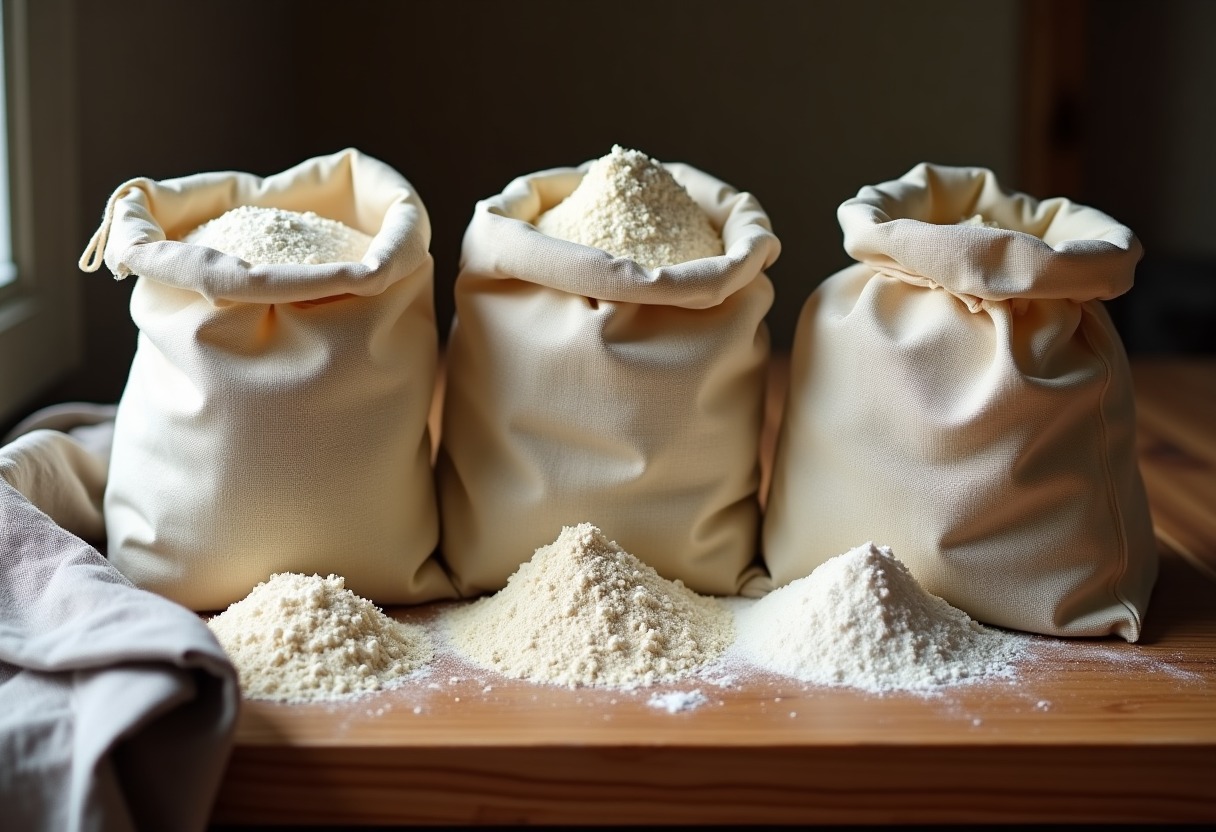
Protein content isn't everything in bread flour, but it's the first number to check when your loaf refuses to hold structure through bulk fermentation. The difference between 11.5% and 13% protein determines whether your dough relaxes into a focaccia puddle or maintains enough tension for a proper ear when scored.
Why Protein Content and Milling Method Matter for Sourdough
Bread flour's protein percentage directly correlates with gluten-forming potential. When flour proteins (mainly gliadin and glutenin) absorb water during autolyse, they form gluten networks that trap carbon dioxide produced during fermentation. Higher protein content—typically 12-14% for bread flour—creates stronger networks that support extended fermentation times and higher hydration doughs.
According to King Arthur Baking, protein content alone doesn't predict performance. The quality of that protein matters equally. Hard red spring wheat varieties (common in northern states) produce extensible, elastic gluten. Hard red winter wheat produces slightly less extensible but stronger gluten. Most commercial bread flours blend these wheat types to balance strength and handling characteristics.
Milling method affects flour performance in ways protein percentages don't capture. Stone-milled flours retain more bran particles and wheat germ, which cut gluten strands during mixing and reduce overall dough strength. Roller-milled flours produce more consistent particle sizes and stronger gluten development but lose some of the mineral content that feeds sourdough starters. For most sourdough applications, roller-milled bread flour provides more predictable results, especially when you're learning shaping techniques or working with higher hydration ratios.
Ash content (mineral content) runs parallel to protein but tells a different story. Higher ash content indicates more bran and mineral content remaining after milling. This feeds starter activity and adds flavor complexity, but also weakens gluten structure. Most bread flours sit between 0.50-0.60% ash content—enough minerals for good fermentation, not so much that gluten development suffers.
Top Bread Flour Brands: Performance Characteristics
King Arthur Bread Flour remains the benchmark for home sourdough bakers. At 12.7% protein, it delivers consistent gluten development across hydration levels from 65% to 85%. The flour absorbs water steadily during mixing, develops windowpane easily with stretch-and-folds, and tolerates long bulk fermentation without degrading. Milled from hard red spring wheat, it produces extensible dough that shapes cleanly and springs reliably in the oven. Available nationally, consistent batch-to-batch.
→ Shop bread flour high protein on Amazon
Central Milling Artisan Baker's Craft runs 13% protein with 0.55% ash content. This flour requires longer autolyse (45-60 minutes) but rewards patience with exceptional strength retention through bulk. The higher ash content feeds starter aggressively—expect 20-30% faster fermentation compared to lower-ash flours. Dough feels slightly rougher during mixing but smooths out beautifully after three or four stretch-and-folds. Produces darker crust color and more complex flavor than lower-ash alternatives.
→ Shop artisan bread flour on Amazon
Bob's Red Mill Artisan Bread Flour sits at 12% protein with unbleached, unbromated milling. This flour behaves predictably for bakers transitioning from all-purpose flour—slightly less strength than King Arthur, but more forgiving if you undermix or overfold. The moderate protein content makes it particularly useful for mixed-grain sourdoughs where rye or whole wheat makes up 20-30% of the flour weight. Good for beginners who haven't yet calibrated their bulk fermentation timing.
Cairnspring Mills Trailblazer represents the stone-milled category at 11.7% protein. Grown and milled in Washington's Skagit Valley, this flour retains more wheat flavor and feeds starter vigorously. The tradeoff: dough strength peaks earlier in bulk fermentation. Shape at 30-40% volume increase rather than the typical 50-75%. Best suited for lower hydration (65-72%) or shorter bulk times. The regional wheat character justifies the learning curve if you want flour that tastes like where it came from.
→ Shop organic bread flour on Amazon
Breadtopia High-Protein Bread Flour pushes protein to 14.3%—the upper range for commercial bread flour. This handles 85-90% hydration doughs without slackening. The high protein content requires proportionally more water and longer mixing to fully hydrate. Bulk fermentation extends 1-2 hours beyond typical timing because gluten networks resist starter activity. Use this when you specifically need maximum dough strength: enriched sourdoughs, high-hydration ciabatta-style loaves, or very long cold retards.
Protein Content and Milling Comparison
| Flour Brand | Protein % | Ash % | Milling Method | Best For | |-------------|-----------|-------|----------------|----------| | King Arthur Bread Flour | 12.7% | 0.50% | Roller-milled | Everyday sourdough, reliable performance, 70-85% hydration | | Central Milling Artisan Baker's Craft | 13.0% | 0.55% | Roller-milled | Stronger gluten networks, longer fermentation, complex flavor | | Bob's Red Mill Artisan | 12.0% | 0.52% | Roller-milled | Beginner-friendly, mixed-grain loaves, moderate hydration | | Cairnspring Mills Trailblazer | 11.7% | 0.62% | Stone-milled | Regional grain character, shorter bulk times, lower hydration | | Breadtopia High-Protein | 14.3% | 0.48% | Roller-milled | Maximum strength, very high hydration, extended cold retard |
Protein percentage directly affects how much water your dough can absorb. For every 1% increase in protein, you can typically add 3-5% more water while maintaining similar handling characteristics. This matters when scaling recipes or adjusting hydration levels for different seasons.
Choosing Flour Based on Your Baking Conditions
Temperature and humidity in your kitchen change how flour performs. In summer months above 75°F, higher-protein flours resist over-fermentation better. Gluten networks stay intact longer when starter activity accelerates in warm conditions. Switch to 13-14% protein flour from May through September if your loaves typically over-proof during bulk.
Winter baking below 68°F benefits from moderate protein (12-12.7%) because fermentation naturally slows. Lower protein flour reaches adequate gluten development faster, compensating for sluggish starter activity. You'll complete stretch-and-folds in three rounds instead of four, and bulk fermentation completes in the same clock time as summer loaves despite cooler temperatures.
Water hardness affects flour choice more than most bakers realize. Hard water (above 180 ppm dissolved minerals) strengthens gluten bonds and tightens dough. If you have hard water, choose slightly lower protein flour (12-12.5%) to compensate. Soft water (below 50 ppm) weakens gluten development—balance this with higher protein flour (13-14%) or extend autolyse by 15-20 minutes.
→ Shop unbleached bread flour on Amazon
Batch size determines whether you should buy 5-pound bags or commit to 25-pound bulk purchases. Flour stays fresh 6-8 months stored in airtight containers at room temperature, 12-16 months refrigerated. If you bake weekly, a 25-pound bag pays for itself in three months. Store bulk flour in food-grade buckets with gamma seal lids—easier to scoop from than bags, and the airtight seal prevents rancidity.
Organic certification matters if you maintain a sourdough starter long-term. Organic flours contain no pesticide residues that might inhibit wild yeast populations. After six months feeding a starter exclusively organic flour versus conventional, many bakers report more vigorous rise and more complex flavor development. The difference shows most clearly in starter feeding ratios—organic-fed starters often peak 30-45 minutes faster at the same 1:5:5 ratio.
What Most Flour Guides Don't Tell You
Falling number—a measurement of alpha-amylase enzyme activity—predicts how flour behaves during fermentation better than protein alone. High falling number (above 300 seconds) indicates low enzyme activity: dough ferments slower, produces less acidity, and maintains structure longer. Low falling number (below 250 seconds) means high enzyme activity: faster fermentation, more acid production, risk of gummy crumb if fermentation extends too long.
Most retail flour packages don't list falling number, but mill spec sheets do. If you order directly from mills like Central Milling or Cairnspring, request spec sheets. Target falling numbers between 250-300 for balanced sourdough fermentation. Bread flours with falling numbers above 350 work better for yeasted breads than long-fermentation sourdough.
Protein quality varies by wheat growing region. Northern-grown hard red spring wheat (Dakotas, Montana, Minnesota) produces the most extensible gluten—best for high-hydration, open-crumb loaves. Southern hard red winter wheat (Kansas, Oklahoma, Texas) creates stronger but less extensible gluten—better for sandwich loaves and tighter crumb. Blended flours balance these characteristics, which explains why most commercial bread flours mix wheat from multiple regions.
Fresh-milled flour performs differently than aged flour for the first 2-3 weeks. Immediately after milling, flour oxidizes rapidly, which strengthens gluten bonds. This "maturing" process peaks around 10-14 days post-milling. Most commercial flour arrives at retail already aged, but if you buy directly from small mills or mill your own, expect weaker gluten development in the first week. Compensate by extending autolyse or adding one extra set of stretch-and-folds.
The brand you use matters less than consistency. Your hands learn specific flour behavior through repetition. Switching flour brands every bag means re-learning dough feel, fermentation timing, and shaping tension. Choose one flour that performs well in your conditions, then stick with it for at least six months. Master that flour's behavior completely before exploring alternatives.
Enriched doughs (butter, eggs, sugar above 5% baker's percentage) require different flour characteristics. These ingredients interfere with gluten development, so high-protein flour (13.5-14%) compensates for the weakening effect. If you regularly bake brioche-style sourdough or sweet loaves, keep high-protein flour separate from your everyday bread flour. The performance gap justifies shelf space for both.
FAQ
What protein percentage should I look for in bread flour for sourdough?
Target 12-13% protein for most sourdough applications. This range provides enough gluten-forming potential for 70-80% hydration doughs while remaining forgiving during mixing and shaping. Higher protein (13-14%) works better for very high hydration (85%+) or extended cold retards beyond 24 hours. Lower protein (11.5-12%) suits beginners or mixed-grain formulas where whole wheat or rye comprises 20-30% of total flour weight. Your kitchen temperature and water hardness affect ideal protein levels—start at 12.5% and adjust based on dough behavior.
Does organic flour really make a difference for sourdough?
Organic flour affects starter health more than bread quality directly. Wild yeast cultures in sourdough starters accumulate pesticide residues over time when fed conventional flour, which can inhibit fermentation vigor after 6-12 months of regular feeding. Starters maintained on organic flour typically rise 20-30% faster at identical feeding ratios and ambient temperatures. For the bread itself, organic versus conventional makes minimal difference in texture or oven spring—gluten development depends primarily on protein content and mixing technique. If you maintain a long-term starter and bake weekly, organic flour justifies the 30-40% price premium. Occasional bakers can use conventional flour without noticeable impact.
Can I mix different bread flour brands in one recipe?
Mixing flours works well for blending characteristics but requires attention to total protein percentage. Calculate weighted average protein: if you use 70% of a 12% protein flour and 30% of a 14% protein flour, your blend contains 12.6% protein (0.7 × 12 + 0.3 × 14). This matters for hydration—higher protein blends absorb more water. Mixing stone-milled and roller-milled flours adds complexity but weakens gluten slightly due to bran particles from stone-milled flour. Start with 75% roller-milled, 25% stone-milled if you want regional flavor without sacrificing too much dough strength. Track your blends in a notebook—successful combinations are worth repeating, and failures teach quickly.
How long does bread flour stay fresh after opening?
Bread flour maintains optimal performance 4-6 months stored in airtight containers at room temperature (65-75°F). Refrigeration extends this to 12-16 months but requires bringing flour to room temperature before mixing—cold flour hydrates slower and can shock starter activity. Freezing preserves flour indefinitely but introduces moisture risk during thawing. Signs of flour degradation: musty smell, bitter taste, or gray-yellow discoloration. Rancidity develops fastest in whole grain flours due to wheat germ oils; refined bread flour resists spoilage longer. Store flour away from strong-smelling ingredients—flour absorbs odors readily. Check flour quality by mixing a small amount with water; fresh flour smells sweet and wheaty, degraded flour smells flat or cardboard-like.
Why does the same flour perform differently in summer versus winter?
Flour's moisture content equilibrates with ambient humidity, changing hydration requirements seasonally. Summer humidity (above 60% relative humidity) increases flour moisture content by 1-2%, meaning you need less added water to reach the same dough consistency. Winter air (below 40% humidity) dries flour, requiring 3-5% more water for equivalent hydration. Temperature affects this more directly: warm flour (above 75°F) hydrates faster and develops gluten quicker, while cool flour (below 65°F) needs longer autolyse and more mixing. Starter activity accelerates 30-50% at 78°F versus 68°F, which means the same flour produces more aggressive fermentation in summer. Compensate by reducing bulk fermentation time by 1-2 hours in warm months, or using slightly higher protein flour to resist over-fermentation. Your proofing setup matters more than flour choice for seasonal consistency.
Flour choice follows starter care and technique in importance—you can't fix poor fermentation management with premium flour, but great flour rewards solid fundamentals with exceptional results.
Some links on this page are affiliate links. We may earn a small commission if you purchase through them, at no extra cost to you.
As an Amazon Associate we earn from qualifying purchases. This article contains affiliate links; if you buy through them we may earn a small commission at no additional cost to you.