Slowing down fermentation in the refrigerator gives you more than schedule flexibility — it fundamentally changes your bread's flavor, crust color, and texture. Cold fermentation, or retardation, creates conditions where lactic acid bacteria outpace yeast activity, building complex acidity while sugars accumulate on the dough surface for superior caramelization.
Why Cold Fermentation Works
Refrigeration doesn't stop fermentation — it shifts the balance of microbial activity. According to King Arthur Baking's research on sourdough fermentation, lactic acid bacteria remain active at temperatures where yeast slows considerably. Between 38°F and 45°F, enzymatic activity continues breaking down starches into sugars, but yeast reproduction nearly halts.
This temperature-driven separation creates three distinct advantages. First, prolonged enzymatic activity develops flavor compounds that warm fermentation misses — aldehydes, esters, and organic acids that register as nutty, wheaty, or faintly sweet. Second, slower CO2 production allows the gluten network to organize more uniformly, producing better oven spring and an open crumb structure. Third, surface sugars concentrate and caramelize during baking, creating deep mahogany crusts instead of pale tan ones.
The practical benefit matters just as much: you control the timeline. Mix dough after dinner, shape before bed, and bake the next evening. Or bulk ferment overnight and shape in the morning. Cold fermentation turns sourdough from a daylong commitment into something that fits around work, sleep, and life.
Cold Bulk Fermentation vs. Cold Final Proof
You can refrigerate dough at two stages, and each produces different results. Understanding when to retard shapes your bread's characteristics and your schedule.
Cold bulk fermentation means refrigerating the dough immediately after mixing or after a short room-temperature bulk. The dough develops slowly in the fridge for 12 to 48 hours, then you bring it to room temperature, shape it, final proof it, and bake. This method creates pronounced tang and works well with lower hydration doughs that might overproof during extended warm fermentation.
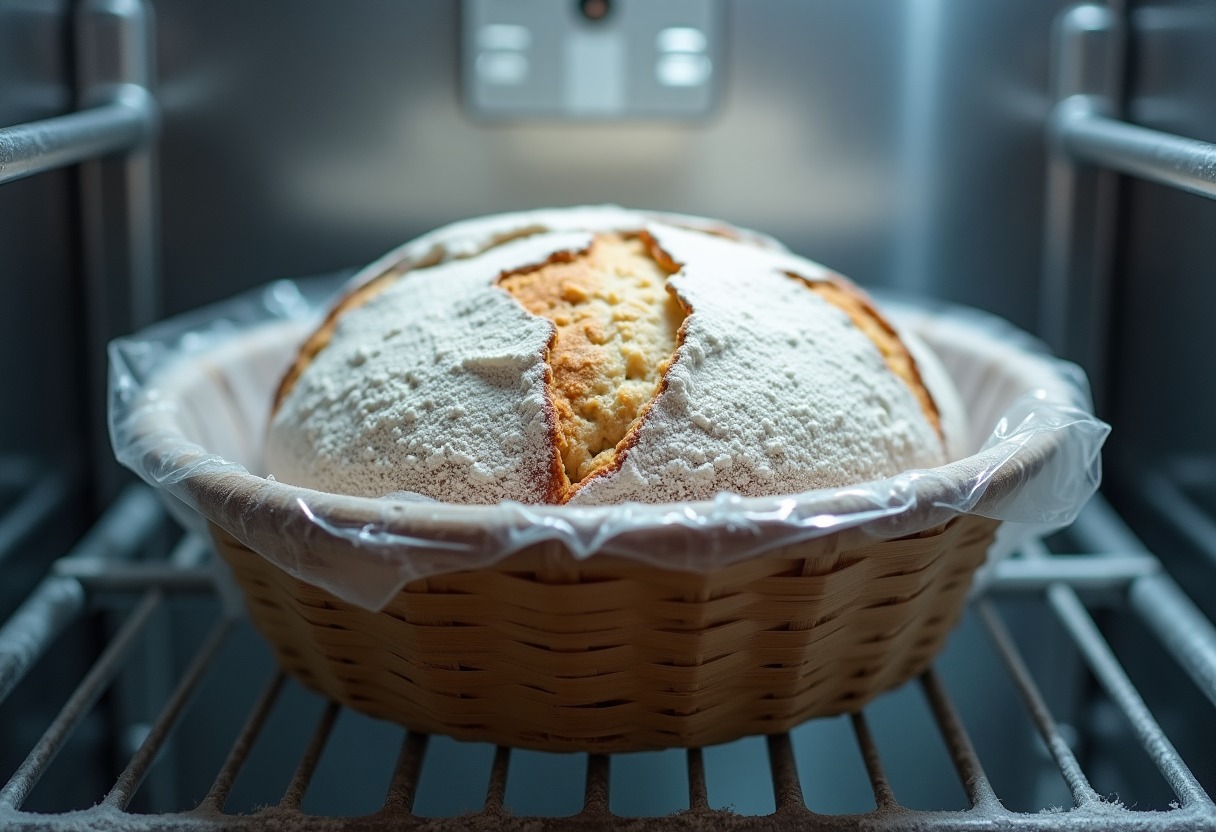
Cold final proof — the more common approach — means bulk fermenting at room temperature until the dough shows clear fermentation signs (usually 25% to 50% volume increase), then shaping and immediately refrigerating. The shaped loaf sits in the banneton in the fridge for 8 to 36 hours, then goes straight from refrigerator to oven. This produces moderate tang, exceptional crust color, and the easiest scoring because cold dough holds its structure.
| Method | Flavor Profile | Timeline | Best For | |--------|---------------|----------|----------| | Cold bulk fermentation | Strong tang, complex acidity | 12-48 hrs cold, then shape + warm proof 2-4 hrs | Low-hydration doughs, maximum sour development, flexible multi-day schedules | | Cold final proof | Moderate tang, balanced sweetness | Warm bulk 3-5 hrs, then cold proof 8-36 hrs | High-hydration doughs, deep crust color, bake-from-fridge convenience | | Hybrid (short warm bulk + cold bulk) | Mild tang, wheaty sweetness | 1-2 hrs warm, 12-24 hrs cold, then shape + warm proof | Gentle flavor, strong structure, beginner-friendly timing | | No retardation (all warm) | Mild, yeasty, less complex | 4-6 hrs bulk + 2-4 hrs final proof | Same-day bakes, mild-sour preference, warmer kitchens |
The hybrid approach — one to two hours of room-temperature bulk followed by overnight cold bulk — splits the difference. It gives yeast a head start for good structure, then develops flavor in the cold. After removing from the fridge, you shape once the dough warms slightly and final proof at room temperature. This method works particularly well when your bulk fermentation timing falls late at night.
Temperature Control and Timing
Refrigerator temperature matters more than most bakers realize. Standard home refrigerators run between 35°F and 40°F — cold enough to slow fermentation dramatically but not cold enough to stop it. Temperatures below 35°F nearly halt all activity; above 45°F, fermentation continues too quickly, and you risk overproofing overnight.
Check your actual fridge temperature with a → Shop refrigerator thermometer on Amazon. Most refrigerators have warm spots near the door and cold zones at the back. Place your dough in the middle shelves, away from both extremes. If your fridge runs cold (below 36°F), you can extend retardation to 48 hours without overproofing. If it runs warm (above 42°F), limit cold proof to 12 hours and monitor closely.
Timing depends on dough strength entering the fridge. For cold final proof, refrigerate when your shaped dough shows gentle spring-back when poked — about 70% to 80% proofed. The remaining fermentation happens slowly in the cold. Eight hours produces mild tang and moderate crust color. Sixteen to twenty-four hours builds deeper flavor and darker crusts. Beyond thirty-six hours, even cold dough can overproof, losing structure and becoming slack.
For cold bulk fermentation, refrigerate within thirty minutes of mixing. The dough will barely rise in the fridge, which is expected. After 12 to 24 hours, remove it, let it warm for one to two hours at room temperature, then proceed with shaping. The dough should feel slightly puffy but not dramatically risen — that expansion happens during the warm final proof.
Container choice affects temperature distribution. Use → Shop airtight dough containers on Amazon that prevent the dough surface from drying out. For shaped loaves, cover your banneton with a → Shop reusable bread storage bag on Amazon or place it inside a large food-grade plastic bag, leaving some air space.
Baking from Cold Dough
Cold-proofed dough bakes differently than room-temperature dough. The core stays cold while the exterior heats rapidly, creating conditions that favor dramatic oven spring and crisp crusts.
Score cold dough directly from the refrigerator. Chilled dough holds clean cuts better than warm, slack dough. Use a sharp lame and cut decisively — cold dough resists the blade slightly, so hesitant scoring creates ragged edges. Check out our guide on how to score sourdough for specific techniques that work well with cold dough.
Preheat your Dutch oven at maximum temperature — 500°F or 550°F — for at least 45 minutes. The extreme heat compensates for the cold dough core. Transfer the cold loaf into the screaming-hot pot using a → Shop silicone bread sling on Amazon or parchment paper. Cover and bake at 450°F for 20 minutes, then uncover and continue at 425°F until deep mahogany.
The cold start creates pronounced ears on scored loaves because the dough's exterior sets before the interior expands, forcing expansion upward through the score rather than outward. You'll see more dramatic openings and better height compared to room-temperature bakes.
Some bakers warm their shaped dough for 30 to 60 minutes before baking, claiming better oven spring. Testing shows mixed results — cold-baked loaves often spring higher because the temperature differential is greater. Try both methods with your setup and preferred flour to see which performs better.
Advanced Retardation Strategies
Extended retardation — 36 to 72 hours — pushes flavor development further but requires careful dough strength management. High-protein flours (13% or higher) maintain structure better during long cold fermentation. Lower-protein or whole-grain-heavy doughs can become over-acidic and slack.
If extending beyond 24 hours, reduce your starter percentage slightly (from 20% to 15%) or use less-active starter (fed 10 to 12 hours prior rather than at peak). This slows fermentation enough that 48-hour retardation won't overproof the dough. You can also lower hydration by 2% to 3% for better structure retention.
Temperature stepping creates nuanced flavor. Bulk ferment at room temperature until 30% risen, refrigerate for 12 hours, warm to 60°F to 65°F for 4 to 6 hours, then shape and cold-proof. This method allows you to fine-tune tang intensity and texture independently.
For multiple loaves, stagger your shaping. Shape one loaf, refrigerate it, then shape the second 6 to 8 hours later. You can bake them together the next day, but the first loaf will have deeper flavor from longer retardation. This technique works well when testing how extended cold fermentation affects a specific formula.
FAQ
Can I retard sourdough dough for more than 48 hours? Yes, but dough quality degrades past 48 hours even in the refrigerator. Beyond 72 hours, expect over-acidic flavor, weakened gluten structure, and potential collapse during baking. If you need longer storage, freeze shaped dough after 12 hours of cold proof, then thaw overnight in the fridge before baking.
Should I cover dough during cold fermentation? Always cover dough to prevent the surface from drying out and forming a skin. Use → Shop proofing containers with tight-fitting lids on Amazon for bulk fermentation or seal bannetons in plastic bags for final proof. A dry surface won't expand properly during baking.
Does cold fermentation make sourdough more sour? Yes, but moderately. Cold fermentation favors lactic acid bacteria over acetic acid bacteria, producing tangy rather than vinegary sourness. For maximum sour, combine cold fermentation with lower hydration (65% to 70%) and whole-grain flour, which both encourage acetic acid production.
Can I refrigerate dough that's already overproofed? Refrigeration won't reverse overproofing. If your dough is clearly overproofed at room temperature — sticky, slack, or smelling boozy — cold temperatures will only slow further degradation. Your best option is baking it immediately as flatbread or focaccia rather than attempting a structured loaf.
Why did my cold-proofed dough spread instead of rising? Either you refrigerated underproofed dough that needed more room-temperature bulk fermentation first, or your refrigerator temperature is too warm (above 45°F) and the dough overproofed overnight. Proper cold final proof requires dough that's 70% to 80% proofed before refrigeration and consistent fridge temps between 36°F and 40°F.
Timing Your Retardation
Cold fermentation transforms sourdough from technique into tool — you're not just making bread, you're engineering flavor and fitting baking into your actual life schedule. Start with cold final proof for reliable results, experiment with cold bulk when you want more control over tang development, and track what works with your specific starter, flour, and refrigerator temperature.
Some links on this page are affiliate links. We may earn a small commission if you purchase through them, at no extra cost to you.
As an Amazon Associate we earn from qualifying purchases. This article contains affiliate links; if you buy through them we may earn a small commission at no additional cost to you.